GE Transport


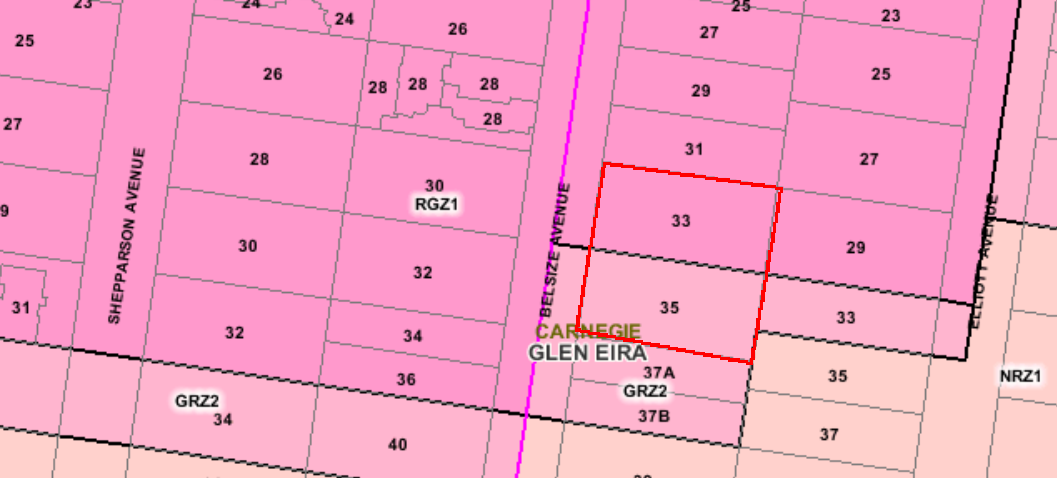
Another disappointing VCAT decision for 33-35 Belsize Avenue Carnegie. This consolidated site runs across both the GRZ and RGZ (ie 3 and 4 storey) current zoning. The applicant got his permit for these heights and 29 dwellings.

Council’s draft structure plans featured this area south of Neerim Road as being ‘downgraded’ to double storey. This decision is simply another nail in the coffin for council’s plans – exacerbated even further by the request for another year’s extension on structure planning and the interim height guidelines. By 2019, we can only speculate as to how many other such developments will occur in these streets!

Below is what the member had to say about council’s plans and their current ‘value’.

Source: http://www7.austlii.edu.au/cgi-bin/viewdoc/au/cases/vic/VCAT//2017/1399.html

There has been some recent attempt by Council to manage this rate of change including the introduction of interim height controls and the preparation of a draft concept plan. I was provided with a copy of the Carnegie Draft Concept Plans and Carnegie Background Report-Building Transition Plan both dated July 2017. These documents propose side-by-side townhouse style development of 1-2 storey scale for all of Belsize Avenue and surrounds, other than along Neerim Road where terrace/ townhouse development of 2-3 storeys is contemplated. The document states that:

Carnegie has experienced a significant transformation in recent years with apartment developments being constructed in traditionally low scale areas. Current policy supports dense apartment developments with little consideration for the area’s existing character. The scale, rate of change and quality of new building stock are all issues that have been raised through consultation.

The Building Transition Plan looks to limit the amount of four storey apartment buildings in the long residential streets of established homes in Carnegie.

Ms Maude expressed concern that if the future changes set out above are implemented that the proposal before me will stand in complete contrast to the new planning framework. I find this strategic work is in its very early stages and cannot be given weight as a seriously entertained planning proposal. I cannot speculate as to future changes in planning policy and must apply the current planning scheme that seeks increased development throughout the urban village with the scale and intensity generally guided by the differentiation between the zones. I must apply the planning scheme as I find it.

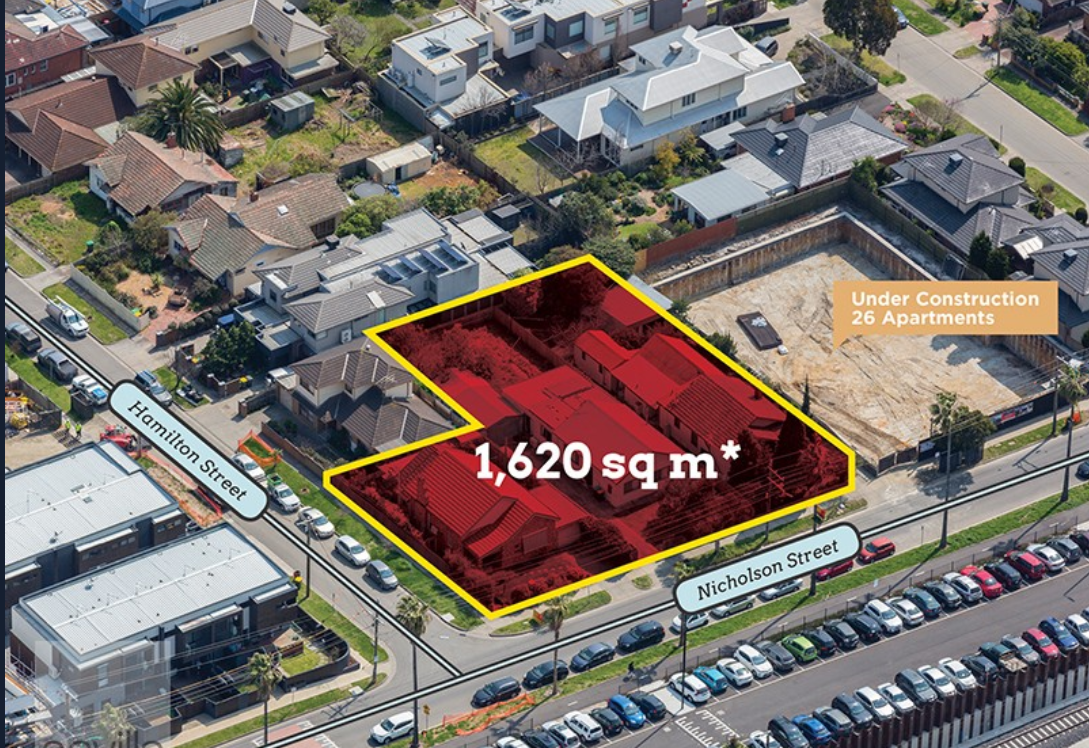
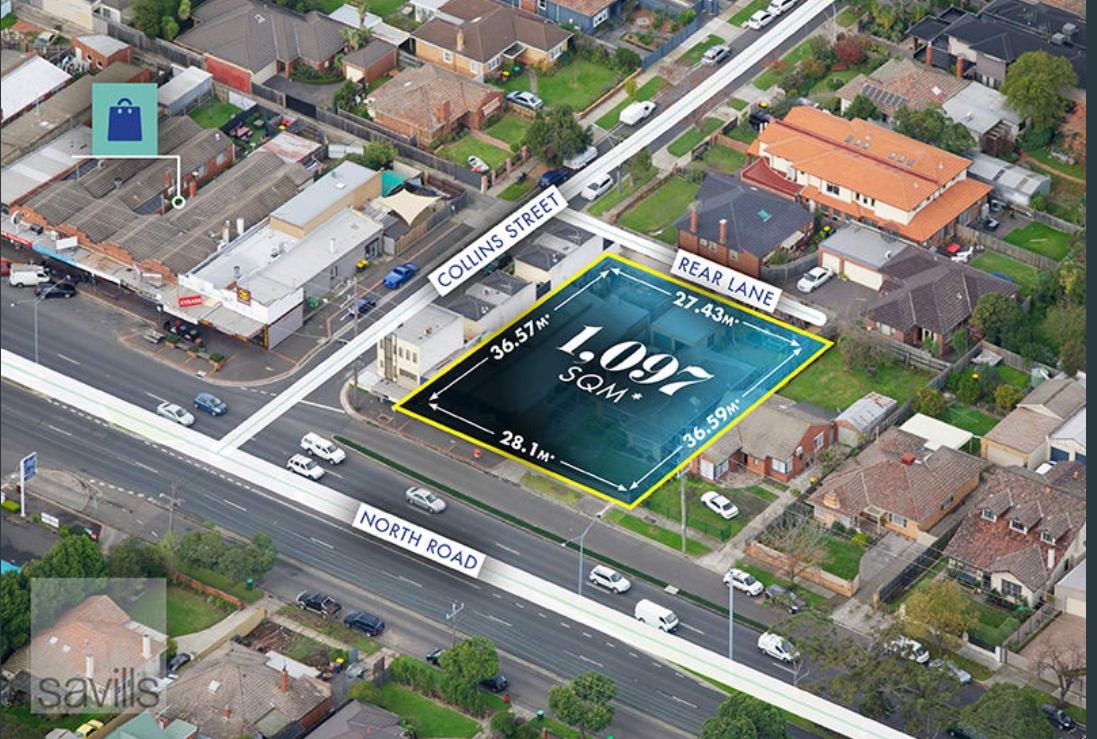
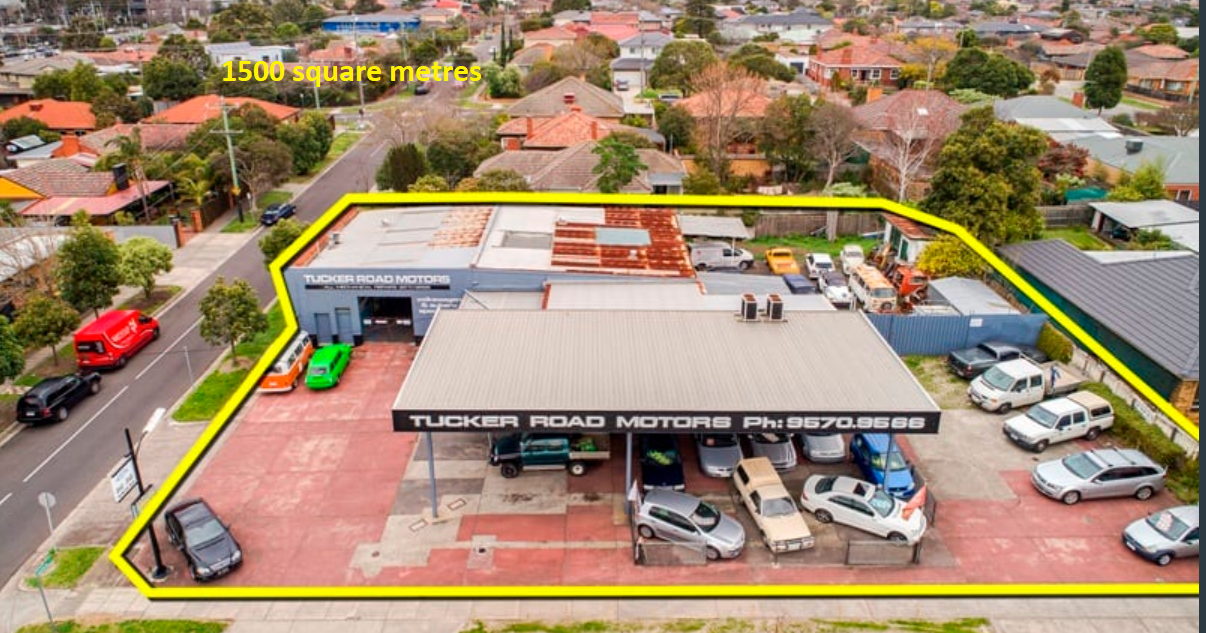
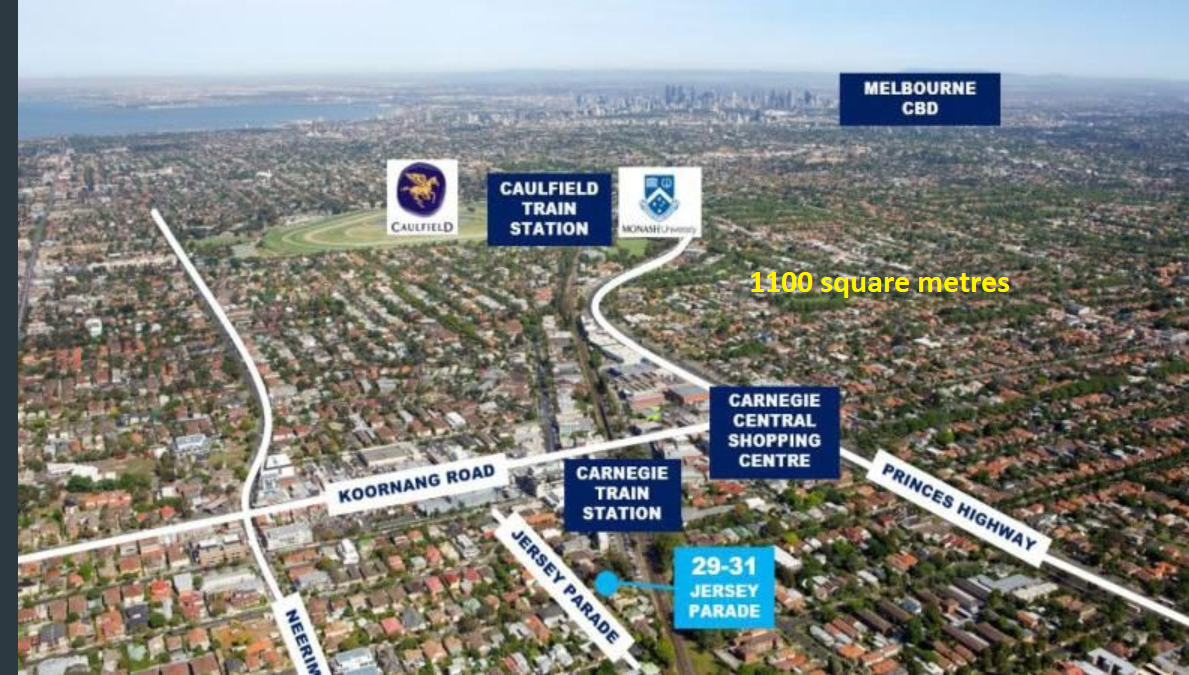
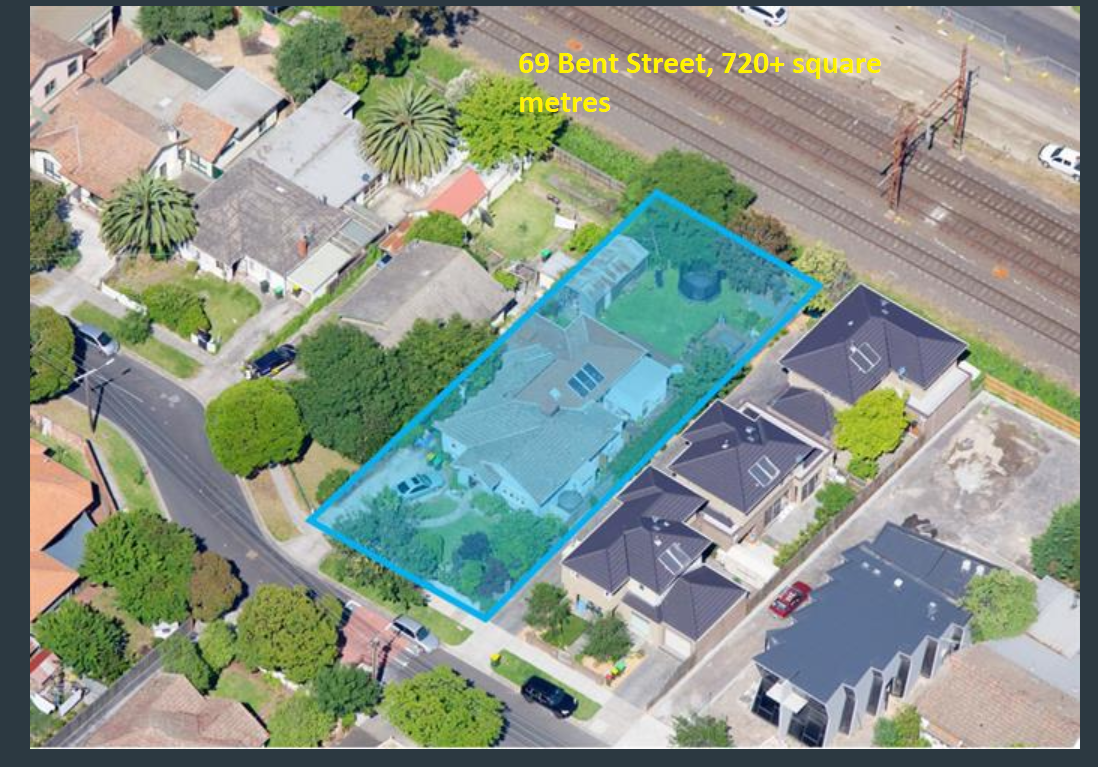
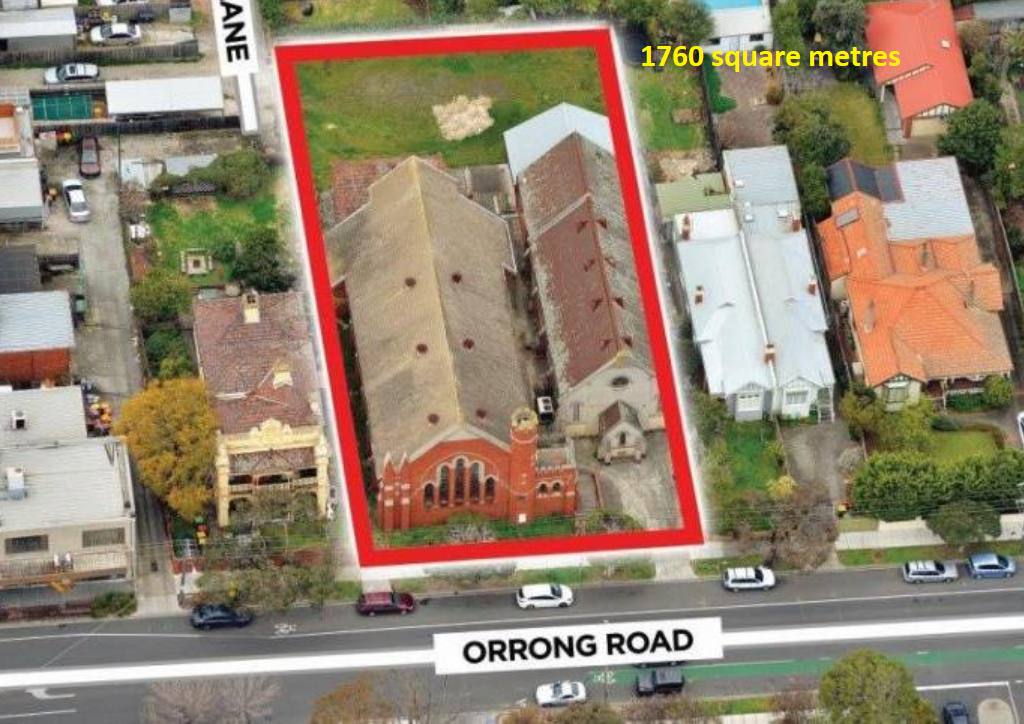
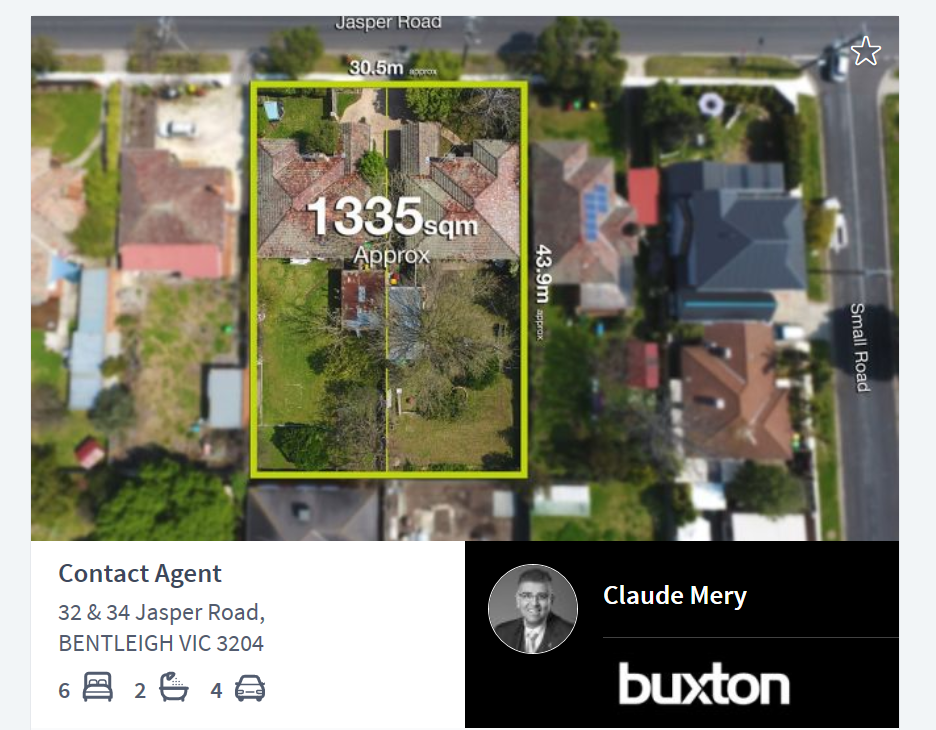
The following screen dumps feature land currently for sale. Most are within ‘neighbourhood centres’ and one is in Elsternwick. Council is now asking for a year’s extension on its interim heights amendment, with no clear dates set for its neighbourhood centres structure plans where plenty of development is occurring. The future is writ large in these shots!


Apologies for this long, long post. It concerns the agenda for Tuesday night’s council meeting. There are many items that deserve comment – some good, some bad, and some particularly atrocious and misleading!

THE GOOD

After years and years of complaint regarding council’s lack of transparency and accountability, there does appear to be some movement at the station –

  • Item 9.8 recommends a tender be decided for telecasting both ordinary and special council meetings. We certainly welcome this and hope that those councillors who previously opposed such a move will now vote in favour. One proviso however is that no mention is made of when this will be up and running (if voted in).
  • For the first time there is now a running sheet of motions to be put forward at the MAV state conference – including how council will vote on the various motions. Previously these were all decided behind closed doors, so again a welcome new initiative. However, we also note that the rationale behind council’s position on many of these motions has not been included.
  • Another item features the review of the Community Engagement Policy. One important advance is the promise to ‘monitor’ and ‘evaluate’ the outcomes. For some unknown reason however, the actual policy is not included in the online agenda!

THE BAD

The most important item for this section is council’s application for an extension on the interim height amendments for Bentleigh and Carnegie. The current amendment expires on December 31st 2017. Council is now requesting a one year extension. What this basically means is that residents will not have the structure planning work completed and gazetted for the major activity centres until at least mid 2019! Worth remembering is that there is not even any ‘interim’ protection for Elsternwick! Further, no mention is made of the current neighbourhood centres – these could be waiting well into the 2020’s! Our concern is that with the constant delays more and more development will occur that will undermine the very objectives of the structure planning work itself. For example: it will be very hard to argue for a 5 storey mandatory height limit when countless buildings already exceed this height and which leaves the door open for similar developments over the next 2 to 5 years. What is certain is that if development continues as it has, especially in neighbourhood centres, then any attempt to rein in development will be that much harder if not impossible!

The above leads onto questioning council’s whole approach to their planning process – namely:

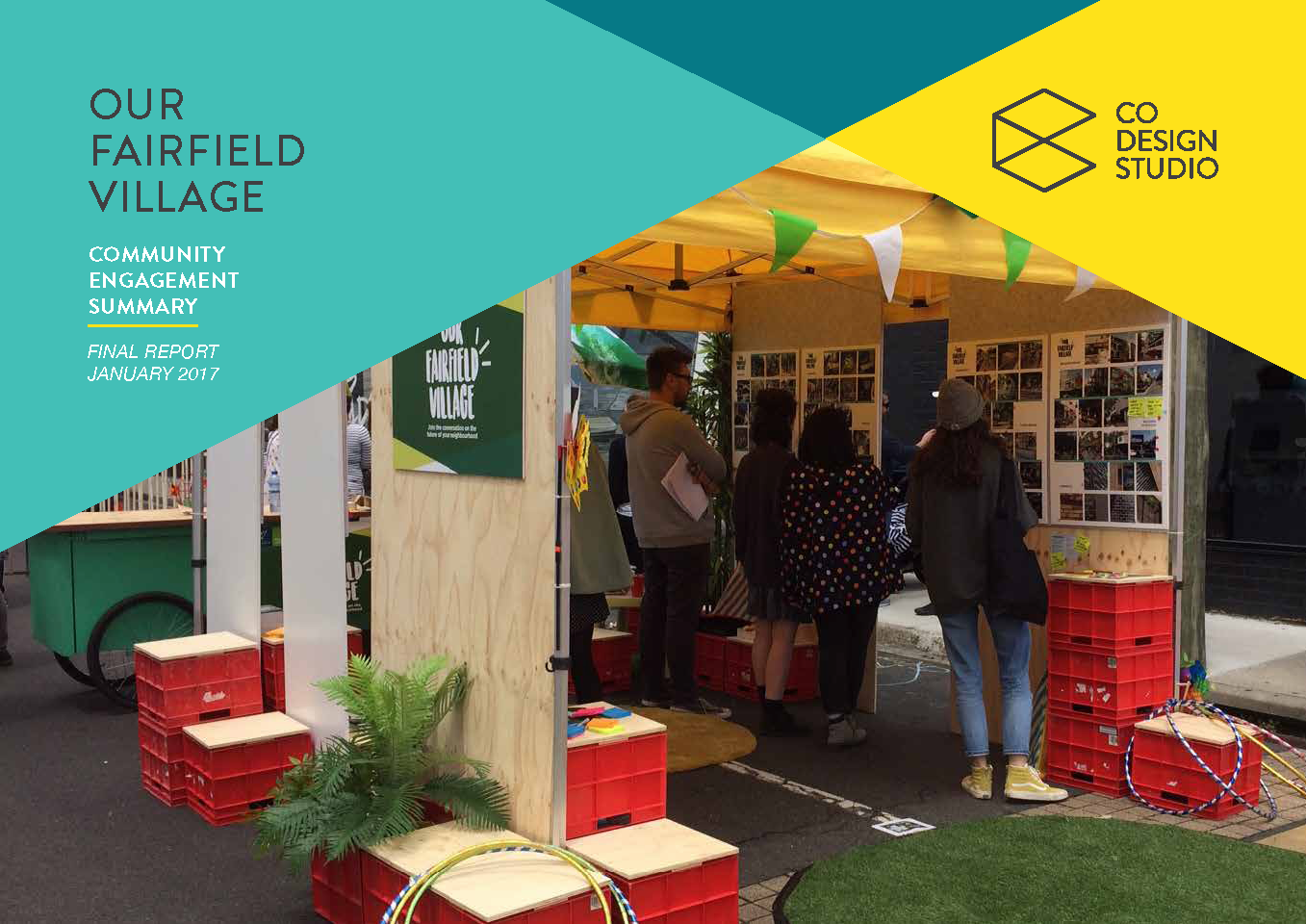
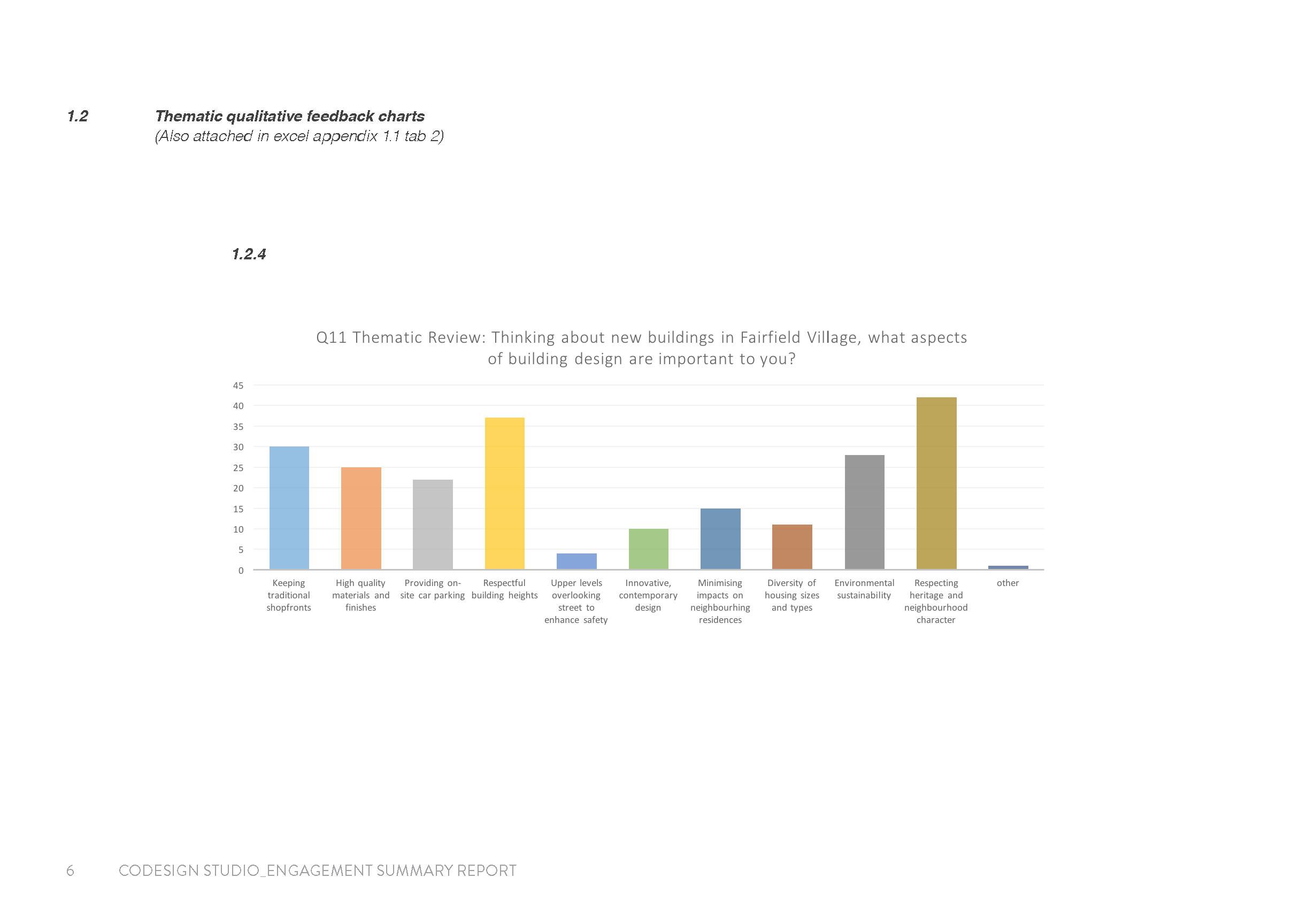
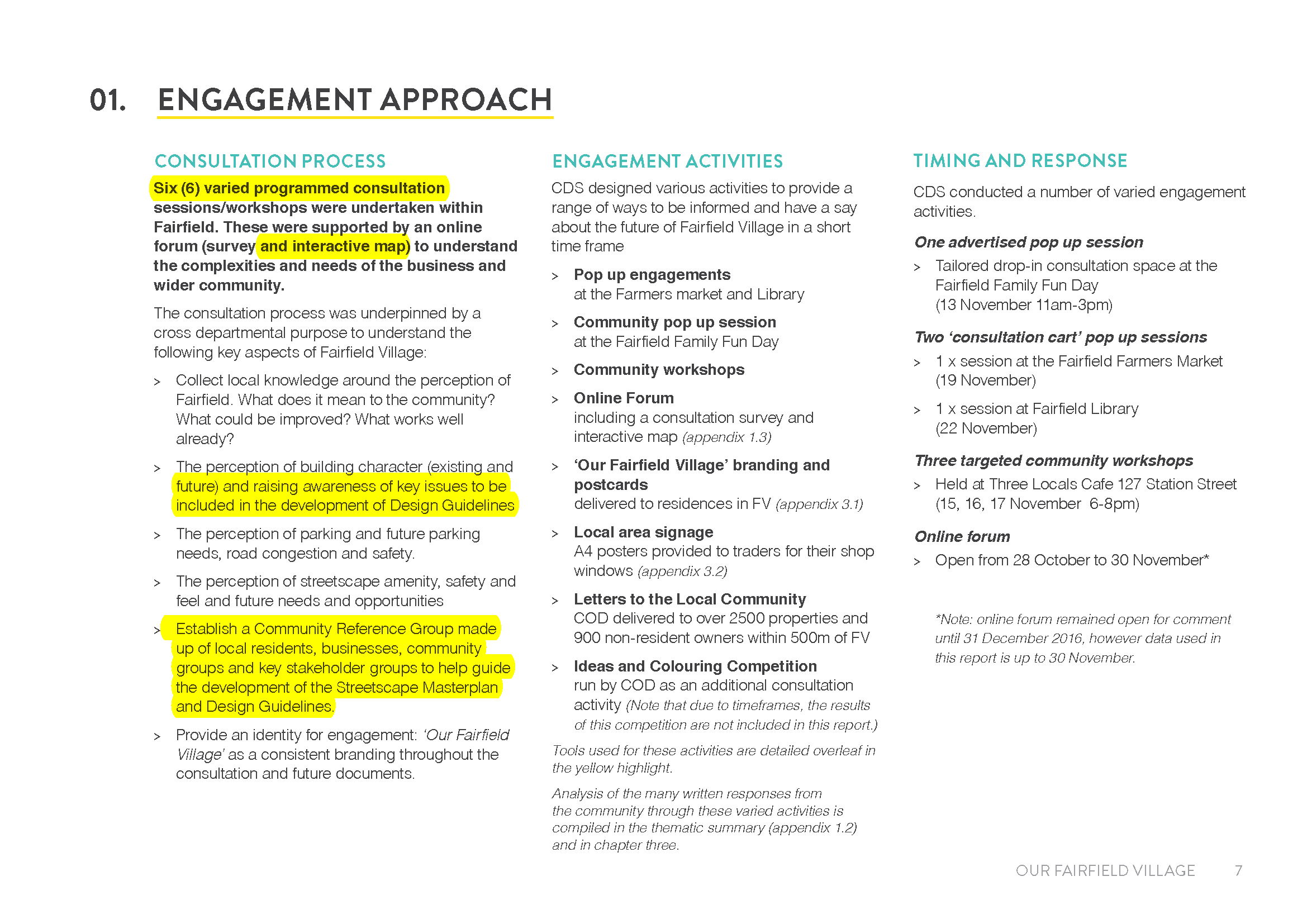
  • Why has it taken til now for those in power to realise that council’s approach to consultation has only now become ‘tangible’ to residents? What does this imply about the intent of the ‘consultation’? We have remarked previously on the lack of detail provided, the lack of strategic justification provided, the lack of genuine reporting of community feedback. From the first stage we have queried the validity of council’s approach – ie asking questions such as ‘what do you love about your shopping strip’ only serves to focus residents’ attention on the commercial strip itself. It does not guarantee that feedback will focus on the primary issues of development, open space, traffic, infrastructure, etc. As an example of what should have been done, and could have been done, readers may find the following screen dumps informative. They come from the Banyule consultation on Fairfield. Please note that the same consultants were used by Glen Eira. The difference in approach is staggering. Why is it that for the Banyule consultation this company included direct questions on height, traffic, etc. and in Glen Eira none of these queries were specifically included in the initial consultation. Surely the only reason to explain this is the brief provided to the consultants! In other words, hired guns again doing council’s bidding!


Plus some screen dumps of the initial ‘consultation’ processes employed in Banyule. Compare this with what Glen Eira did!

  • Given the amount of work required why has it taken over a year to advertise for an additional 4 planning staff (ie consecutive ads over 2 weeks). And this is on top of continued planning applications, VCAT appeals, etc. and council repeatedly bemoaning the fact that they have been inundated with applications and that more and more cases end up at VCAT. This trend has been evident since the introduction of the zones but it has taken 4 years to act!
  • Making matters even worse is item 9.2 in the agenda. For a ‘simple’ 2 double storey application in Thomas St, East Brighton, council couldn’t reach a decision in the required 60 days. This, despite the fact that they admit the following – The application was lodged on 28 November 2016. The application was advertised from 27 April until 15 May 2017 and 1 objection was received. The applicant lodged an appeal at VCAT on 6 September 2017 against Council’s failure to make a decision within 60 statutory days. Our sympathies to the developer in this instance since it is unfathomable why such an application should take forever to finalise! Of course, this means more money spent by ratepayers at VCAT! Please note we are not commenting on the merit of the application – merely on the unbelievable time lines.
  • We also observe that in the past year or so the number of refusals for 2 double storeys in the NRZ has gone through the roof. Invariably, our analysis indicates that in over 95% of cases that end up at VCAT, the applicant gets his 2 dwellings!
  • The only ‘positive’ out of all this is that council has at least had the good grace to publicly admit how inept it has been – there has been community feedback regarding the overall process including:
    • Requests for city-wide dwelling forecasts that inform the structure planning
    • Improved communication to all residents and landowners within the study area for the next stage of engagement
    • An appropriate level of detail for best consideration of positive and negative impacts of the proposals

Ensure the next round of consultation period allows affected parties enough time to read through the released information in detail, attend information sessions and provide a response to Council.

Surely this should have been a given right from the start? 

THE UGLY

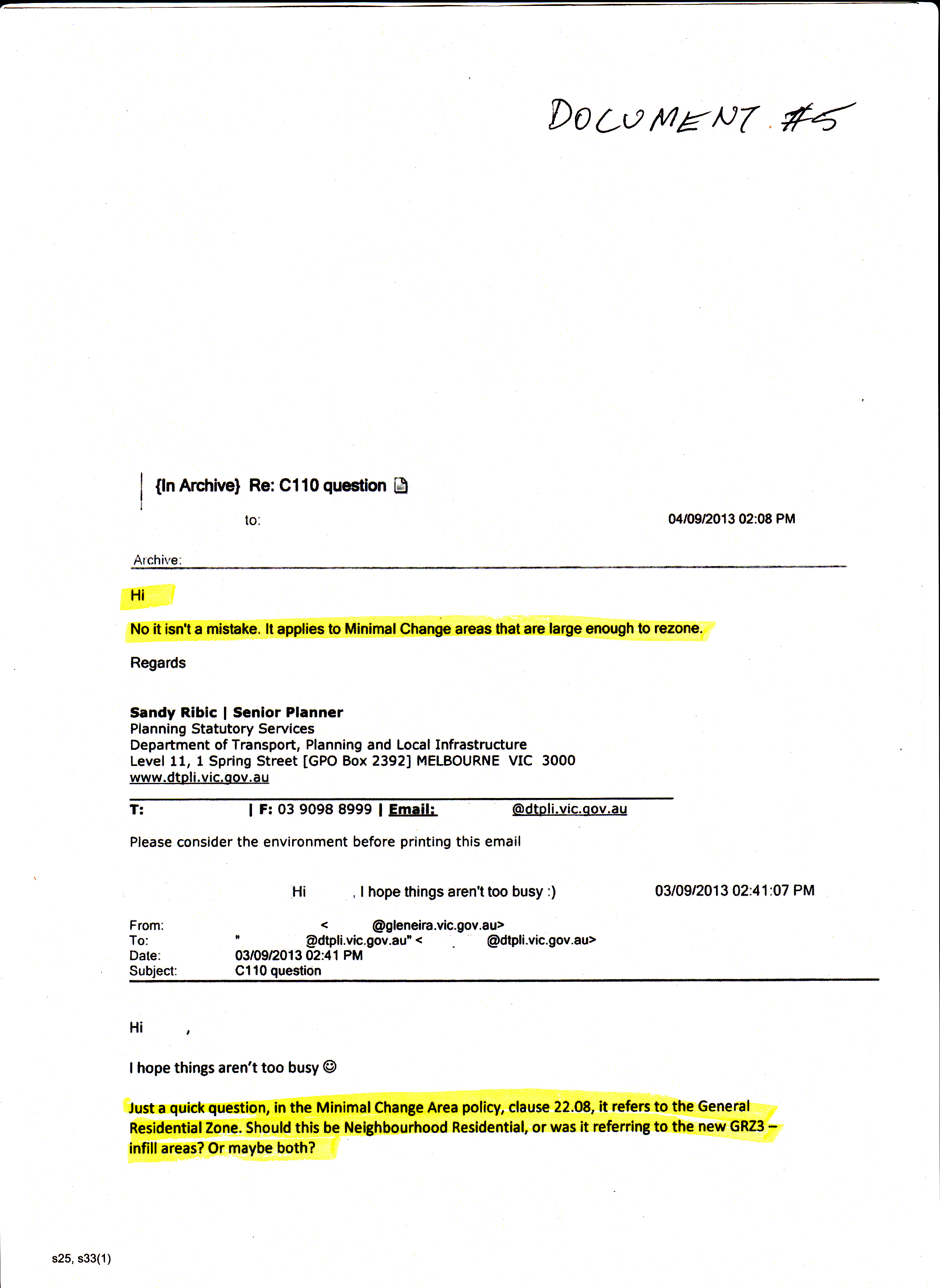
The ‘ugly’ aspect of this agenda is council’s continued inability to reveal the truth in an honest and upfront manner. Instead we are presented with the usual spin and misleading statements designed to basically cover up what actually happened. Here is the offending extract –

We have commented on this issue previously, (see: https://gleneira.wordpress.com/2014/08/19/inept-or-indifferent/) but will repeat the evidence which shows beyond any shadow of a doubt that:

  • Senior officers knew of this ‘error’ back in July 2013
  • That from the department’s point of view this was not an ‘error’ but a required trade off for the introduction of the residential zones
  • Council also knew that at least one case went to VCAT where the developer tried to use this clause to his advantage (unsuccessfully).
  • To now turn around and claim that this ‘error’ has only been ‘recently’ discovered is a blatant lie! Even if Akehurst and Camera (the ‘architects’ of the residential zones) are now gone, Torres is still at council as are many other senior planners. Where is corporate memory? Why can’t council simply admit the truth?

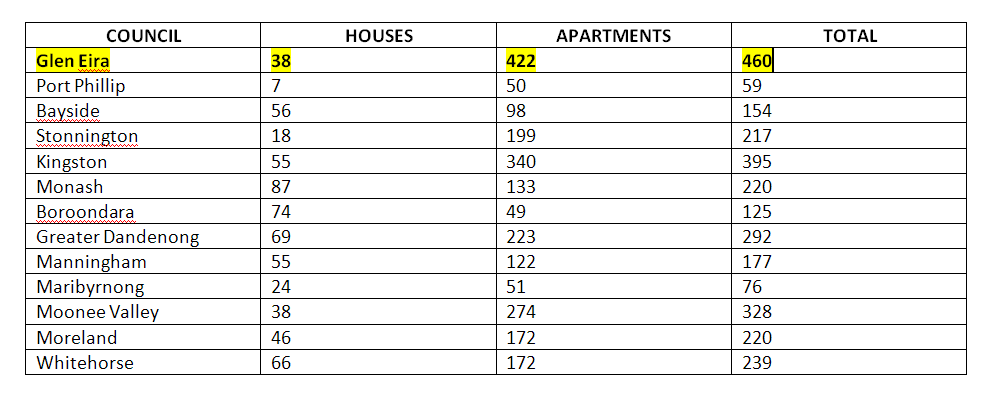
The ABS has today released its figures for building approvals for the months of July and August, 2017. They have also updated their data for the 2016/17 financial year. Glen Eira’s numbers for the past financial year were upgraded to 2021 building permits granted.

Please consider the table below. Glen Eira is now not only the biggest development municipality in the south east, but is winning hands down for the Northern suburbs alone. If the current rate continues, then Glen Eira will well and truly surpass another 2000 net new dwellings per year!

We have uploaded the full Excel spread sheet HERE

Readers may also find the suburb analysis of interest as well (uploaded HERE). Please note that Bentleigh-McKinnon is now far ahead of Carnegie. Quite incredible considering that McKinnon is merely a poor old neighbourhood centre in council’s heirarchy and Bentleigh is supposed to have only ‘minimal’ growth according to the structure planning documentation. The bottom line remains, we believe, that land zoned GRZ provides easier and cheaper pickings for developers – and McKinnon, Ormond have plenty of land zoned GRZ. Our prediction, unless zoning changes dramatically, is that these figures only represent the tip of the ice-berg and more and more development will be focused in our neighbourhood centres – especially since council has not provided any timelines for addressing this crucial issue or providing any information as to its intentions for these suburbs!

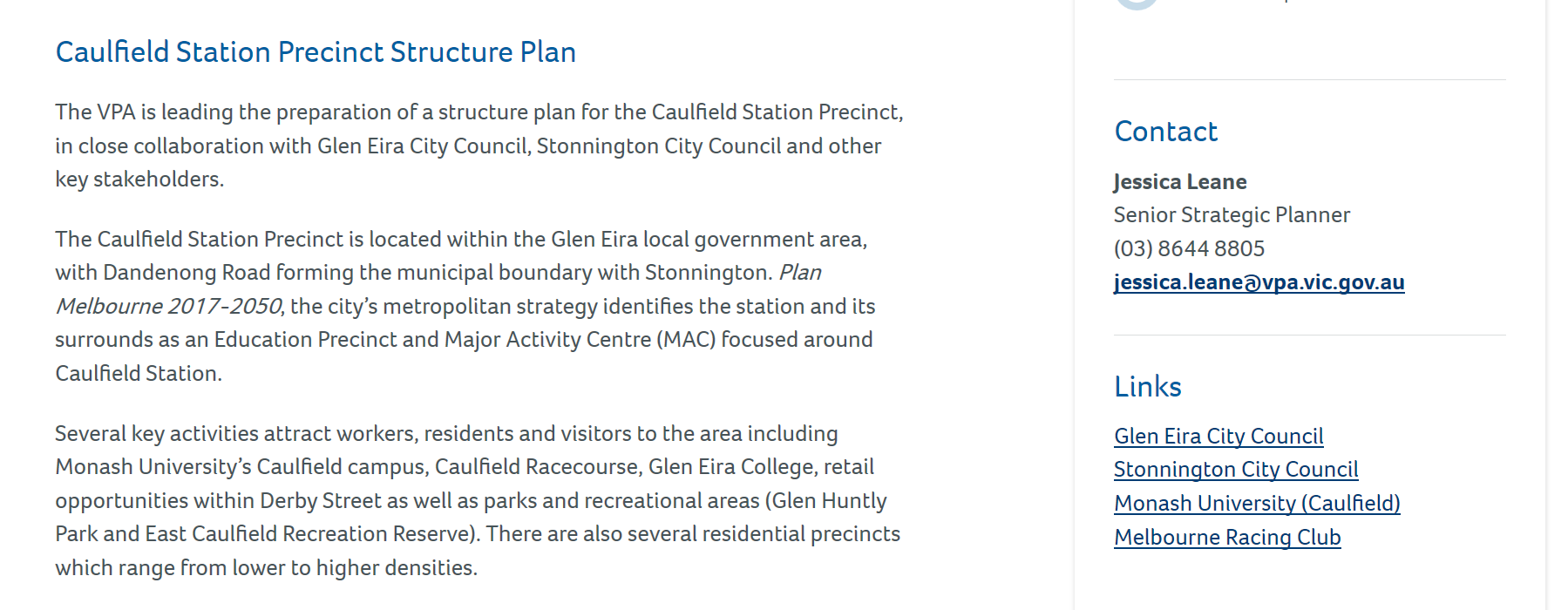
Source: https://vpa.vic.gov.au/project/caulfield-station-precinct/

The issue of density has received very little attention from our planners and from councillors as a whole. Yet it is crucial to an understanding of what is happening and what is forecast. Remember that Glen Eira is already one of the densest municipalities in the state and it would seem that council is gearing up for even more!

According to Victoria in Future, 2016 Glen Eira’s density (persons per square km) was 3,544 based on 2011 Census figures. If we look at the 2016 Census data this figure has now risen to 3,621 per square km across the entire municipality. What these figures don’t tell us is ‘residential density’ – that is, the number of persons per square km of residentially zoned land. This measure provides a far more realistic reflection of liveability and ‘capacity’ for that matter. It also reveals those areas that are probably under extreme pressure in terms of infrastructure, traffic, etc.

Our figures are based on the State Government’s spatial mapping facility and date from soon after the introduction of the residential zones in August 2013. Since this time there have been plenty of changes to industrial zoned land to either Mixed Use or Commercial. These latter zonings allow residential development as opposed to the former ‘industrial’ zoning. Hence, our figures are in all likelihood an underestimation of what is the current situation.

Our calculation of ‘residentially zoned land’ includes the following – Commercial 1; Mixed Use; Neighbourhood Residential (NRZ); GRZ ; RGZ. Parks, roads, public utilities, etc. have been excluded. We concentrate exclusively on land that is deemed suitable for ‘residential’.

Our analysis reveals several fascinating results that are a major cause for concern.

  • Many of our ‘neighbourhood centres’ are the densest in the municipality – some exceeding the so called major activity centres (ie McKinnon, Ormond, Caulfield North, Murrumbeena).
  • If this is indeed the case, then it reveals again the disaster of the 2013 zoning where developers exploited the zoning in these smaller centres rather than the major activity centres (apart from Carnegie that is).
  • Yet, when work on these neighbourhood centres will be completed is anyone’s guess. In the meantime the zoning remains and that means more development if current trends continue.
  • There is absolutely no excuse for council not to address the zoning in these neighbourhood centres – especially if the plan is to increase the potential for more development in the major activity centres.

BENTLEIGH

In 2013 Bentleigh had 4,123,990 square metres of residentially zoned land. Converted to square km, this equals 4.123 square km or 412.39 hectares. The 2016 census tells us that Bentleigh’s current population stands at 16,153. That means that Bentleigh has a residential density of –3,917 per sq.km

The same process has been used for the following neighbourhood centes –

ORMOND

1,793,474 sq.m of residentially zoned land converts to 1.793 SQ.KM. Population is 8417 = 4,694 PERSONS PER SQUARE KM

MCKINNON

1,392, 499 = 13.92 square km – 6064 POPULATION = 4,356 PERSONS PER SQUARE KM

MURRUMBEENA

2,237,382  – 22.27 sq.km – 9926 POPULATION = 4457 PERSONS PER SQUARE KM

CAULFIELD NORTH

3,798,341 = 3.798 SQ.KM = 15269 POPULATION = 4,020 PERSONS PER SQUARE KM

This data flies in the face of council’s past strategic planning. And it should have been obvious 12 months into the new zones. When huge swathes of our neighbourhood centres are zoned for 3 storeys, why wouldn’t developers go for these areas instead of the more expensive and problematic commercial zoning in the major activity centres? Leaving neighbourhood centre planning to the end is not a solution – not whilst more and more development is occurring in these centres.

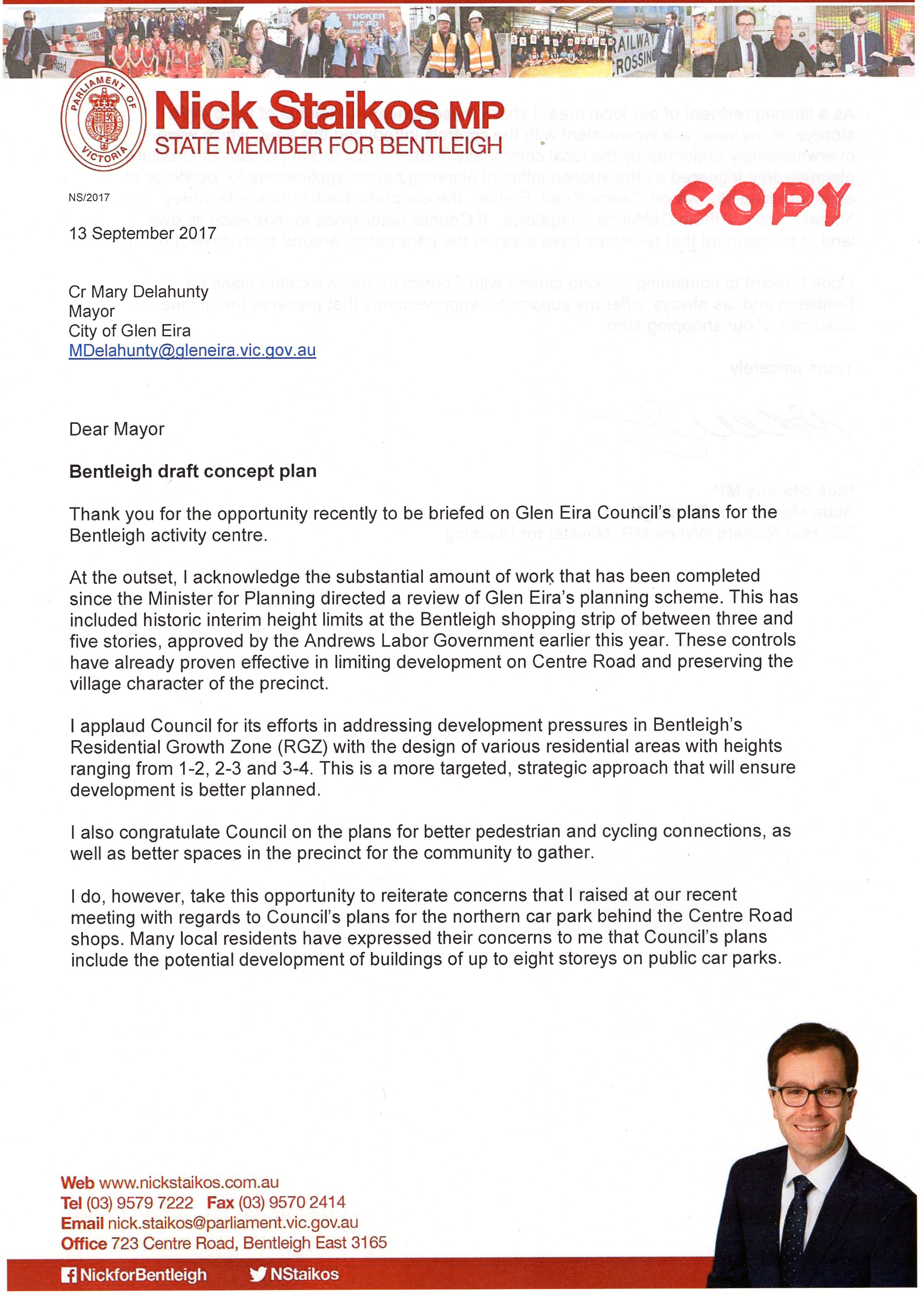
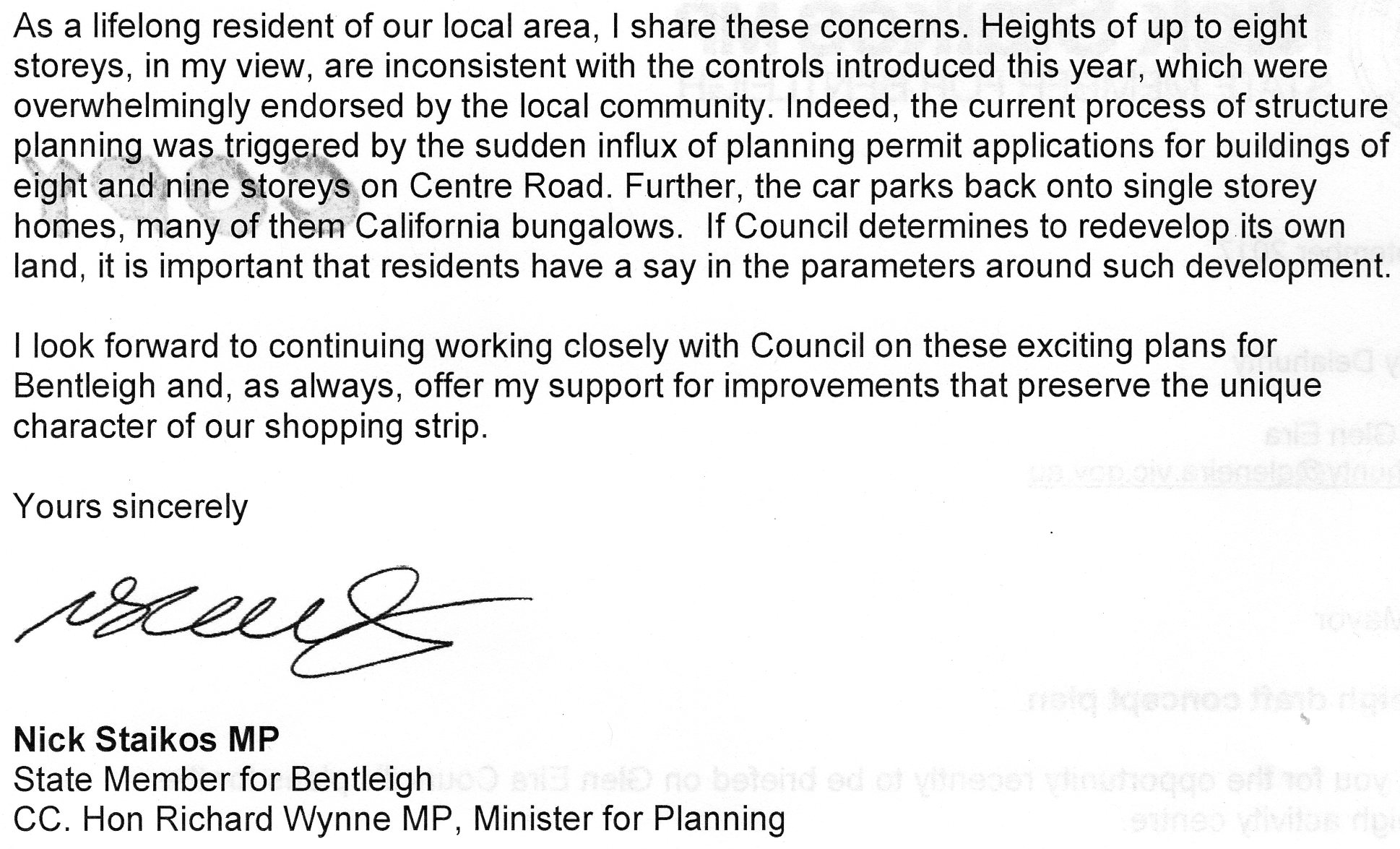
Despite the ‘tactfulness’ of the missive presented below, it is very clear that Staikos (and Wynne) are far from happy with our wonderful council. The reasons are obvious:

  • Wynne grants interim height guidelines of 5 and 4 storeys for Bentleigh and 7 and 6 storeys for Carnegie and council literally thumbs its nose at this with its proposed 8 and 12 storeys respectfully.
  • Community outcry is growing and state elections are not that far off
  • Repeated questions to council remain unanswered, and concept plans lack all strategic justification – especially the ‘upgrading’ of East Bentleigh.

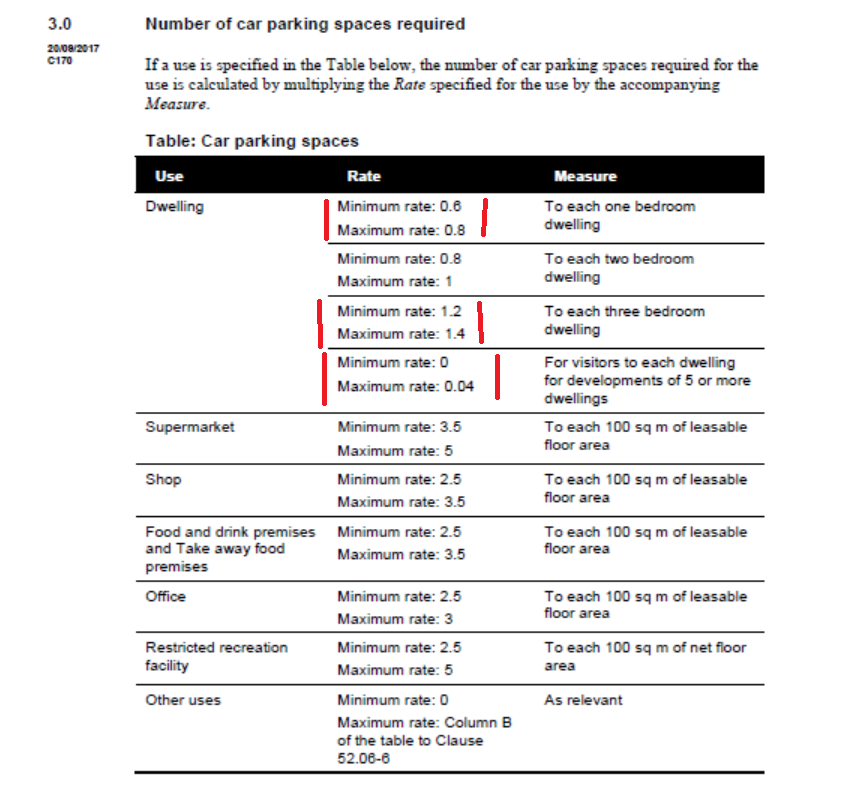
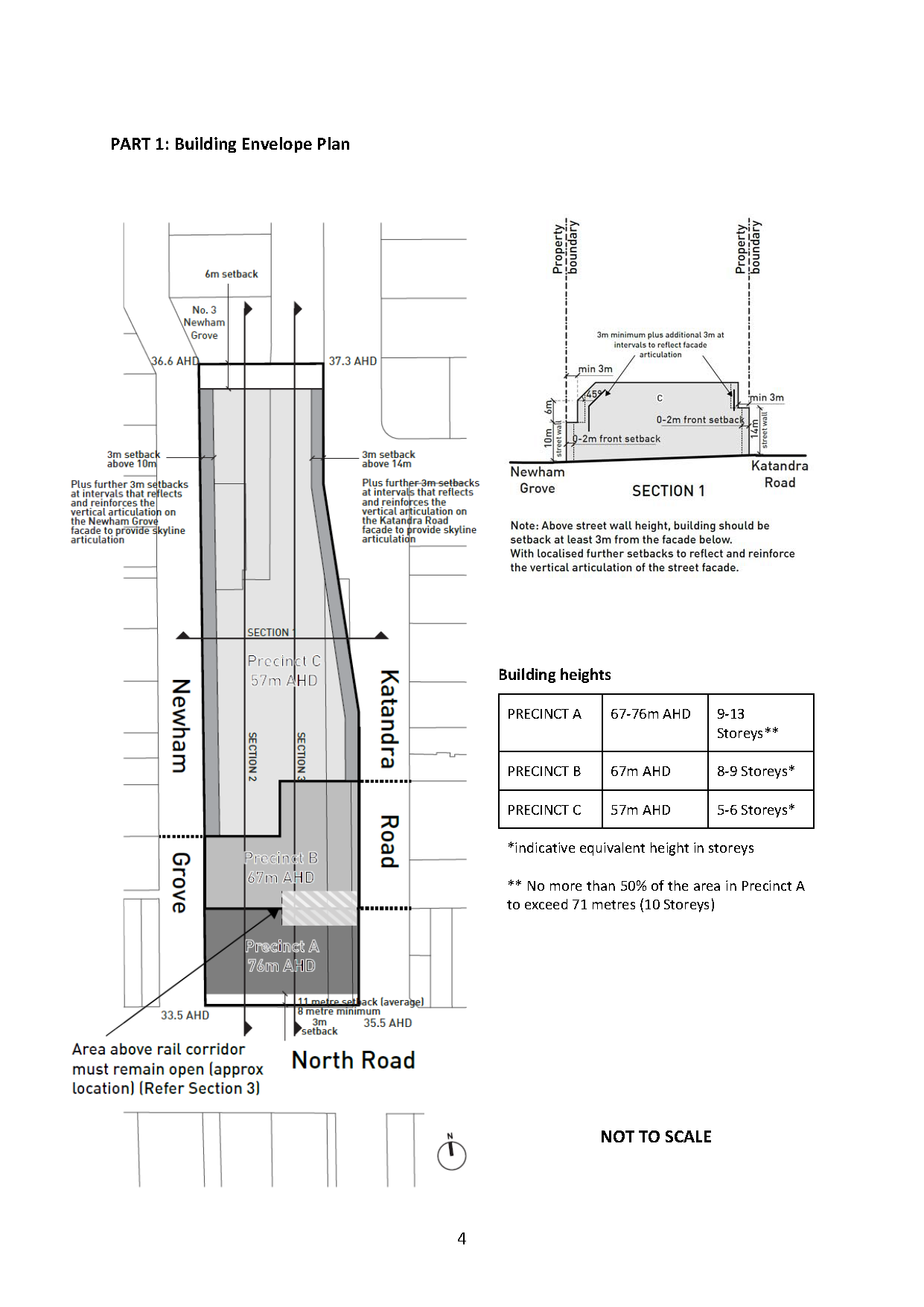
The Ormond Tower Amendment (c170) was finally published today. It is frankly an abomination! Here is a rundown of the lowlights –

  • The area is now zoned as a Comprehensive Development Zone with its own schedule
  • Parking allocations are minimalist and well below what is required
  • Height limits are NOT mandatory
  • The Minister retains control over everything – no third party objection rights
  • The ‘development plan’ is nothing more than politspeak and in our view hardly qualifies as a decent planning document that residents can have faith in. (Uploaded HERE)
  • New clauses introduced into the planning scheme reinforce all of the above nonsense – ie Clause 21.04 now includes – Recognise the opportunity for landmark built form, on strategic redevelopment sites made available through the removal of a level crossing, to establish a new character whilst maintaining neighbourhood amenity
  • It should also be noted that the Minister has not released the report upon which his decision is supposedly based!

The following screen dumps summarise the amendment –

PARKING

BUILT FORM, SETBACKS & HEIGHT

What this augurs for Bentleigh & McKinnon is anyone’s guess!

Council has in all probability spent a fortune on consultants. As we’ve stated previously, consultants are basically hired guns. Much depends on their brief and the directions issued to them by council staff. This is made crystal clear in the Introduction to the consultant’s Housing Study. We’re told that the objective is –

To assist in preparing the (activity centre structure planning) strategy, Council has commissioned .id (Informed Decisions) to undertake an analysis of housing consumption patterns and opportunities. It also includes an assessment of centres identified by Council as appropriate for intensification and their potential dwelling capacity

Thus from step one the game is virtually rigged! It is council staff who have decided which areas are ‘appropriate for intensification’, where the borders will now be, and which areas will be upgraded to allow for more intense development – but without providing residents with the necessary logic behind any such decisions nor any data that might justify such decisions.

Not for the first time in this entire structure planning process, have we been provided with consultants’ reports which in many areas are certainly open to question. The latest example(s) come from the Housing Report.

‘NET GAIN’ OF DWELLINGS IN NRZ

We are told that the report is dated May 2017. That is 2 months after Wynne introduced VC110 which removed the mandatory 2 dwellings per lot in the Neighbourhood Residential Zone. It is therefore fascinating to observe that the Housing Report does not once make specific mention of this fact – although there is reference to the ‘garden requirements’ and height limits.

Why not state the removal of the mandatory 2 dwellings per lot up front? Why not address its potential impact across all of Glen Eira and not just those areas immediately outside the designated activity centres? We proffer the answer that this would cast some serious doubt on the figures provided by the report – even though they are claimed to be ‘conservative’. If there is no limit on the number of dwellings now permissible in NRZ, then that means that infill will in all likelihood  be far greater than suggested by the report. If it is therefore greater, then the argument could follow that activity centres do not need to be so gung ho in allowing more development. That in fact much of the current zoning can be reduced and that there certainly is no need to expand the borders of activity centres and rope in more dwellings for greater development.

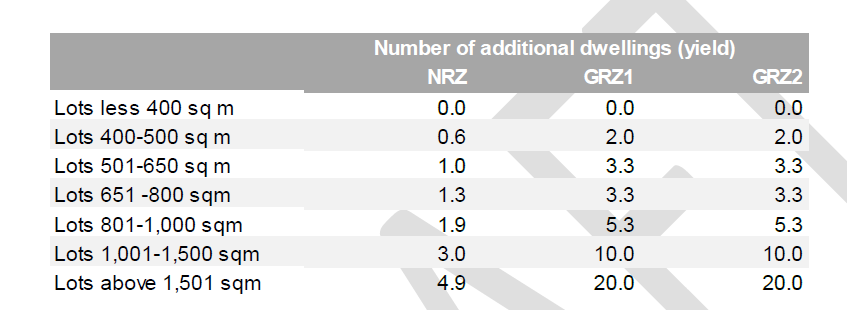
The report goes on to claim that in the NRZ areas there will only be the following number of ‘net gain’ new dwellings –
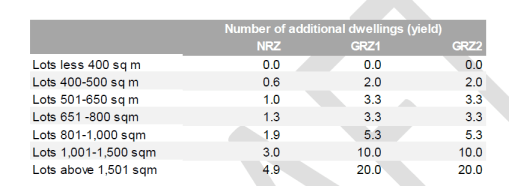
We now have 10 applications in for multi unit development in NRZ. These applications reveal how suspect the Household predictions are. For example:

  1. 4-6 Hudson Street is applying for 8 dwellings on a site of 1308 square metres. According to the above table this should only result in a ‘net gain’ of 3 dwellings. If a permit is granted the NET GAIN IS 4 DWELLINGS.
  2. 36 Mawby Street is applying for 4 dwellings on 740 square metres. The report suggests that this will result in a ‘net gain’ of 1.3 dwellings. The result would be a net gain of 2 dwellings.
  3. 2 Newman St is applying for 6 dwellings on 964 square metres. The report suggests a net gain of 1.9 dwellings. If approved, the net gain will be 4 dwellings.
  4. 5 Rigby Avenue is applying for 5 dwellings on 877 square metres. Again the report would suggest that this is a net gain of 1.9 dwellings. The gain is 3 dwellings.

As a total from these 10 applications, and assuming they will all be granted permits, we have the prospect of 41 dwellings instead of 20 dwellings. That is a doubling in yield from March 2017. And this is only the beginning. What happens in the GRZ zoned areas is yet to unfold.

EAST VILLAGE

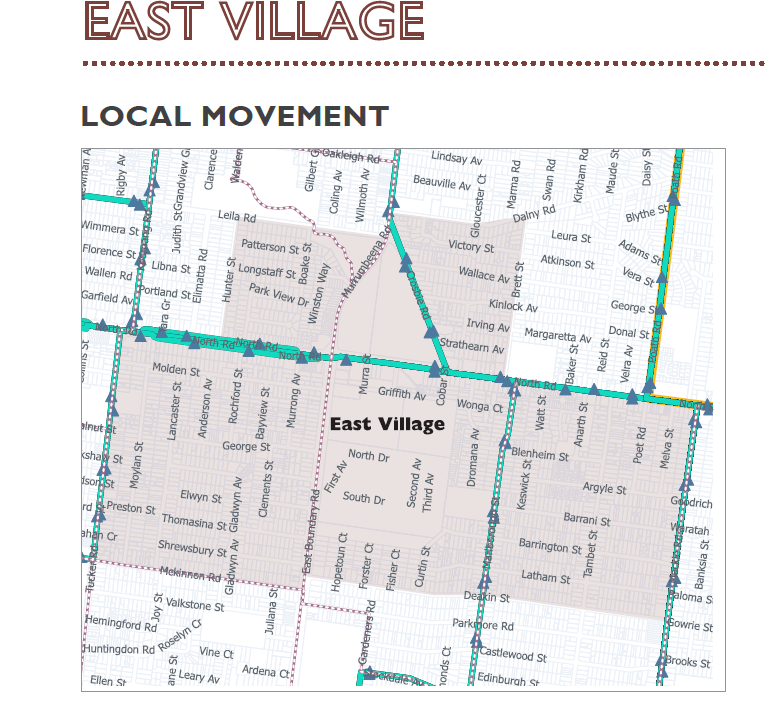
The East Village Activity Centre has now mushroomed into an enormous area that also includes Virginia Park. Given what’s happened with Bentleigh we are confident that this will now be the borders of the new ‘activity centre’. Virginia Estate is smack in the middle of this ‘activity centre’.

Despite various sections of the Housing Report referring to ‘development sites’, Virginia Estate is not included in any calculation, in any forecast, nor in any comment as to how this 20 hectare site might impact on housing numbers. Absolutely extraordinary when it is clear that this site has the potential to house anything from 3500 to 4500 new apartments. What we do get is this convenient ‘get out of jail’ clause  – No assumptions have been made about the conversion of additional industrial or commercial land being rezoned for residential purposes and the dwelling yields that might arise from such a process.

Surely any decent and ‘objective’ analysis of housing capacity in a municipality must include the largest site in all of Glen Eira? And then go on and provide some possible scenarios of what 3500-4500 new dwellings would mean for ‘housing opportunities’ overall. If one 20 hectare site is about to become the greatest residential development in Glen Eira’s history, then surely some slack can be given to other areas? But no! Council’s view is the more the better and the report plays along via its silence on this issue.

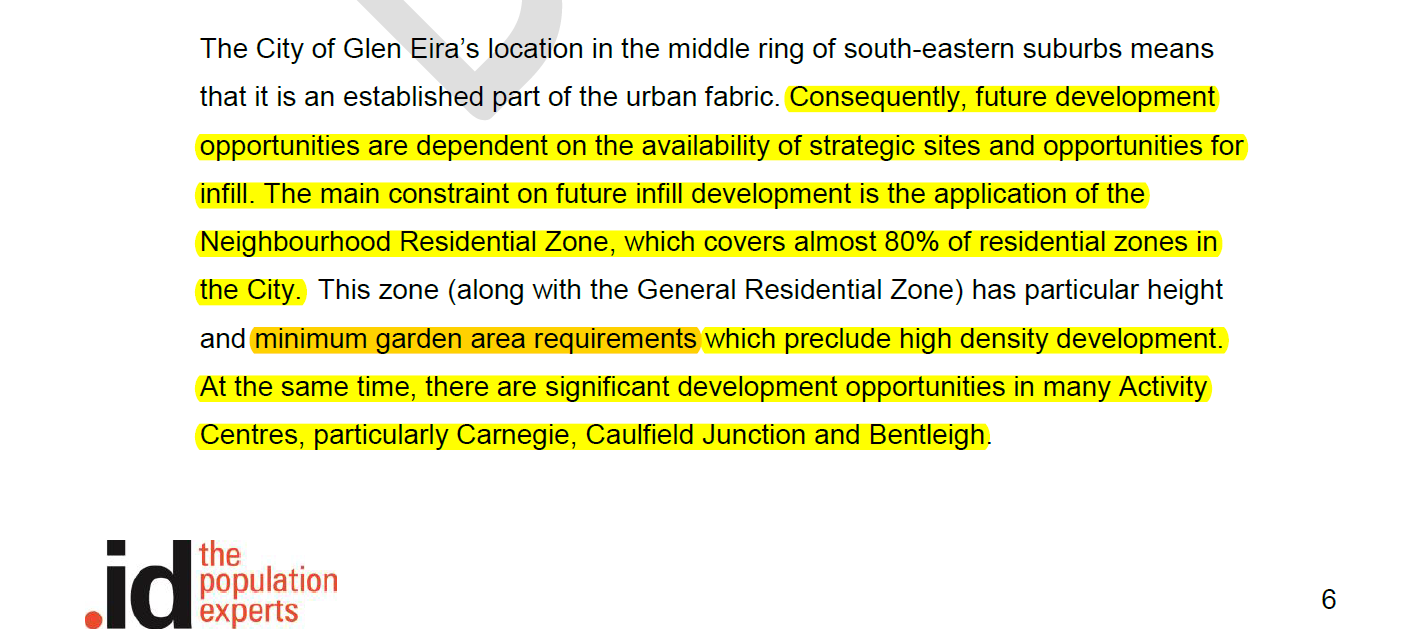
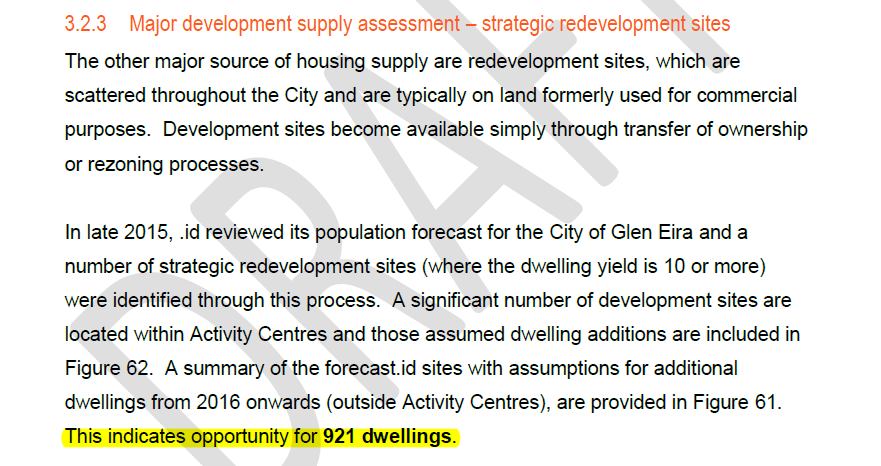
Despite what we cited from the report previously (ie ignoring commercial and industrial land) the report also includes the following:
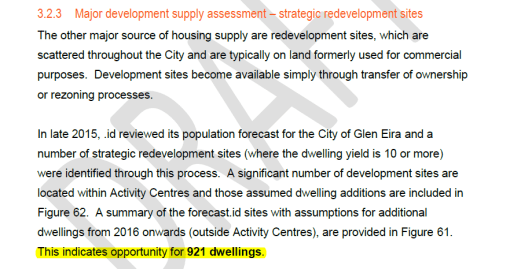
 

Thus if a major source of housing supply is ‘redevelopment sites’, then what credibility should be given to a report that totally ignores these massive sites? Even more ludicrous is the fact that council is now working on an East Village/Virginia Estate Structure Plan that is, we assume, independent and separate from what its Activity Centre consultants determined as the entire area. (ie above graphic of East Village ‘study area’).

There are a multitude of questions that demand answering and which council has steadfastly refused to address. Instead, residents have been fed, in dribs and drabs, consultant’s reports that raise more questions than they answer and which often fail to stand up to full scrutiny. If you can’t trust the data, then you can’t trust the conclusions and the outcomes.

Finally, we highlight one other paragraph from the Housing Report that typifies the inconsistency and lack of strategic justification for much of council’s planning. The paragraph concerns the ‘values’ assigned to each activity centre. The higher the value, then the more development was likely to occur according to the Household report.

At the other end of the scale, East Village recorded the lowest score, receiving just one point out of five. This centre does not have railway or tram services, and has minimal retail and other services along its commercial spine. It is also split by two major arterial roads that impacts on urban integration. East Bentleigh also received a relatively low score of just two points. It was notable that lack of public transport access was the major reason why these centres scored poorly when measured against the attributes.

If council is reliant on its consultants and won’t do anything without ‘evidence based’ data, then why, given this report:

  • Is Bentleigh East being ‘upgraded’?
  • Why isn’t Caulfield, nominated as a Major Activity Centre by Plan Melbourne,  being given priority ahead of say Caulfield South and Bentleigh East?

The lack of transparency in everything council has done must be highlighted. We have morphed from ‘study areas’ to actual increased borders of activity centres; asking what people ‘love’ about their ‘shopping strips’ achieved nothing except focusing residents’ attention on the shops themselves instead of all the related issues such as building heights, open space, etc. etc. etc. The list goes on an on. Now a year down the track residents are still being kept in the dark as to:

  • precise housing numbers required to meet population growth
  • strategic justification for increased activity centre borders
  • strategic justification for 8-12 storeys
  • costs
  • timelines
  • future of neighbourhood centres
  • whether or not Glen Huntly, East Bentleigh, Caulfield, Caulfield South, Ormond will have more of their areas turned over for increased development
  • high rise at railways – Bentleigh, McKinnon given council’s cryptic comments of the past

Other councils do not operate in this fashion. Their consultants reports do not ignore commercial and industrial land. Their consultants provide a ‘cost-benefit’ analysis for what is termed ‘community benefit’. The list goes on and on. When compared to other councils and their community consultations Glen Eira continues to exhibit all the old traits of lack of transparency, accountability and a genuine intent to listen to the community.
Whilst it is true that the past is the past and that we should be looking forward rather than back, history remains important – especially if that history is now being ‘revised’ and distorted with claims that are anything but truthful and has the potential to influence the present and future. This post seeks to correct these revisionist accounts by analysing the Hyams comments put up on the Bentleigh Action Group Facebook page. His comments are presented in italics.

….. when we consulted on the review of the planing scheme in 2010 -2011, we were told by the community that we should get mandatory height limits in residential zones, transition between zones and better protection for areas of significant neighbourhood character. We therefore changed our significant character areas to Neighbourhood Character Overlays, and added areas to those, and, as part of the zones that came in during 2013, achieved mandatory heights in all residential zones – the only Council to have this, and transition zones.

COMMENT

  • Mandatory height limits were NOT imposed on all residential zones. MUZ (Mixed Use Areas) which are included as ‘residential’ were totally ignored and remained so until the introduction of the recent interim height limits in Bentleigh & Carnegie. All other MUZ zones in Glen Eira do not have height limits.
  • There is not one single word in the 2010 Planning Scheme Review about mandatory heights for residential zones. Either this was not an overwhelming view in 2010, or the ensuing report was a total work of fiction. We’ve uploaded the report HERE and ask readers to carefully peruse this document. We challenge anyone to find a single word about height limits that does not relate to aged care only!
  • There has never been any ‘transition zones’ in Glen Eira. At best it can only be called a ‘buffer’. The only concession was the additional setbacks for the three storeys of GRZ2 when this bordered a Neighbourhood Residential zoning. – Even these setbacks and schedules pale into insignificance when compared to what other councils were able to achieve in their GRZ zoning. See: https://gleneira.wordpress.com/2015/09/22/some-more-comparisons/
  • The eventual Amendment C87 which introduced the Neighbourhood Character Overlays was totally inadequate. Many areas previously labelled as ‘significant’ became ‘non-significant’ . The total properties deemed ‘significant’ was just over a 1000 out of 50,000 plus homes. Further, nominations were made by officers alone. Both councillors and residents had no avenue upon which to include their nominations. The planning panel in fact stated that another amendment was required in order for residents to have other properties included. This took another few years and the additional numbers were less than earth shattering. It is also worth remembering that the Planning Panel report of December 2002, told council to introduce Neighbourhood Character Overlays. It took 10 years for council to get Amendment C87 underway!!!!!

We ahd (sic) intended to wait for the respective state governments to finish further reviewing their planning policies before we did our next review, so we knew what we were working with but, as you noted, the government required us to proceed with our Review.

COMMENT

  • The legislation requires local government to undertake reviews every 4 years. Council was required to undertake its next review in 2014. That would have provided them with a year’s ‘experience’ of the zones. Instead they requested and received extensions from Guy. Who applied for these extensions and whether they were done under delegated authority is the crucial question since there was no resolution permitting at least 3 consecutive requests for extensions. Readers should also note that the authority to request extensions is not delegated under the legislation. Thus, the questions remain – did councillors know that these requests had gone in? Were they supportive of these requests? If Wynne had not finally had a gut full of Glen Eira, and refused their latest request for a 2 year extension, would we still be sitting on our backsides and not have had a planning scheme review in 2016?

 It is notable that, as part of its review of the planning zones, the government has decreed that all General Residential Zones should now have mandatory height limits. We already had this, but many others had heights that were lower, but discretionary.

COMMENTS

  • Once again Hyams is not averse to telling a few porkies. If height limits are included in the schedule to a zone, then they are MANDATORY and not discretionary. There were plenty of other councils who used their schedules to good effect and achieved far greater benefit to their communities than Glen Eira did. Our council worked on the principle of ‘we’re perfect’ so don’t have to change a thing and we can rely on a housing strategy based on 1999 data. Thus it became a ‘one size fits all’. The schedules basically replicated what had been set up through Amendment C25 in 2004 (this amendment created the Housing Diversity/Minimal Change areas). By way of example here is what some other councils were able to achieve via the schedules to their zones –


Bayside – MUZ – 50% site coverage; GRZ’S – 50% SITE COVERAGE (Glen Eira 60% in GRZ and nothing for MUZ)

Boroondara – GRZ1 – 9 metres; GRZ2 – 10.5 metres; grz3 – 10.5 metres;

Greater Dandenong – permeability – 30% for GRZ1 and in NRZ – 40% permeability (Glen Eira – permeability 25% in NRZ and 20% in GRZ/RGZ)

Manninghem – RGZ1 – 11 METRES FOR PARTS OF MUNICIPALITY; GRZ1 – 9 METRES; PLUS FOR NRZ1 IN CERTAIN AREAS THERE IS THIS MANDATORY STIPULATION – The number of dwellings on a lot must not exceed 1

Stonnington – grz5 – 9 metres; grz6 – 11.5 metres; grz7 – 10.5 metres; grz8 – 12 metres;  grz10 – 9 metres; grz11 – 12 metres; grz 12 – 9 metres; grz14 – 9 metres

 Furthermore, the new mandated height is 11 metres, but we stay at 10.5 metres because that’s what we have in the schedule to the zone. It would therefore appear that we were ahead in this, rather than outdated.

COMMENT

Again, what is not stated is as important as what is stated. With the new legislation of VC110, councils have been given 3 years (from March 2017) to come into line – ie 9 metres in NRZ and 11 metres for GRZ. All councils will then revert to these heights regardless of whether or not their current height limits are lower. Even more important is the fact that council decided that what was previously a 9 metre discretionary height limit should overnight become a 10.5 or a 13.5 height limit across the board – all done in secret and without any consultation whatsoever. Other councils of course analysed their municipalities and produced various height limits to suit the specific areas. In other words, they actually did some decent planning. Glen Eira did none of this.

The committee advising the government in its review stated very clearly that the default zone should be the GRZ, not the NRZ as it is in Glen Eira, and that the NRZ should be used sparingly. This, if implemented, would have resulted in far more streets like Princes Street, not fewer, but fortunately, the government has not chosen to redraw the boundaries, despite the recommendation. It is also fortunate, therefore, that we had the zones implemented before the committee report.

COMMENT

The effect of implementing the zones before the committee report, and being the first council in the state to do so, gave developers a year’s head start to exploit the new height limits in both the GRZ and the RGZ. Developers now knew that they could build 4 and 3 storeys with impunity across large swathes of the municipality. Also worthy of comment is the fact that the Planning Panel report of 2004 stated unequivocally that council needed to address the borders for its neighbourhood centres and consider whether some suburbs like Murrumbeena and Ormond were in fact suitable candidates for designation as neighbourhood centres. Council has totally ignored this for the past 13 years. The panel also repeatedly stated that amendment C25 was viewed as ‘interim’ and that council must proceed with far more and immediate strategic planning to iron out all the anomalies. This never happened.

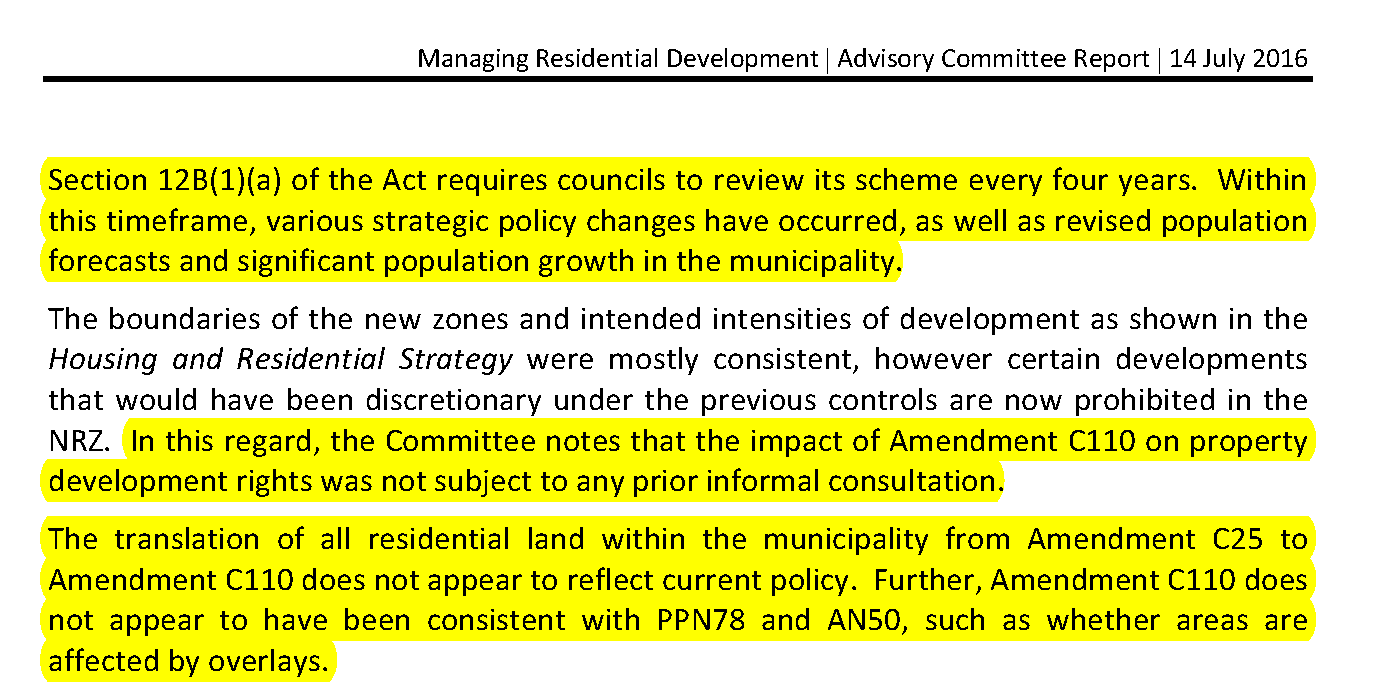
Even the later government  Advisory Committee report had this to say about the process that Glen Eira used to introduce the new zones in 2013 – especially the lack of strategic justification and lack of consultation.

The State Government has not redrawn the boundaries as Hyams stated. This has been left up to individual councils. So what does our mob do? Borders have expanded, hundreds of currently zoned NRZ properties are now ‘suitable’ for 3 to 4 storey development and current 4 storeys may well become 12 storeys. Is the past about to repeat itself? Where is there one iota of strategic evidence for any of this current planning?

The past is thus crucial to an understanding of the present and the future. As a result of this past council now finds itself with a deluge of required work. For many areas it is far too late to ameliorate the damage already done. Structure planning is the start of a long overdue process. It is up to residents to decide whether the eventual outcomes from the current planning efforts are adequate and deliver what is expected. But structure planning is only the start. The most important aspect will be the ensuing amendments and their strategic justification, plus the accompanying schedules to the various zones.

Residents have made their views absolutely clear. Councillors had better be ready for an almighty fight if residents feel that the past is about to be repeated.

« Previous PageNext Page »