GE Governance


Presented below are some lowlights from yesterday’s Hansard debate on the Planning & Environment Objectors’ Bill. We have admittedly been very selective in what we reproduce here – the ‘debate’ went on for ages, with many questions and responses. Readers should go directly to Hansard if they wish to read the entire debate.

Most noteworthy is:

  • Libs raise many concerns – but the Bill is not opposed
  • Greens raise many concerns – but the Bill is not opposed
  • Clearly, Dalidakis appears well and truly out of his depth!
  • Throughout the entire duration, there appeared to be approximately 15 elected members sitting in the chamber! Woeful performance from all concerned!

The Standing Committee also tabled its summary report – UPLOADED HERE

++++++

Mr DAVIS – indicate at the start that the opposition will not be opposing the bill, but we do not believe the bill achieves what the government set out to achieve. We do not believe the bill actually achieves what the government claims it achieves. We do not believe it will lead to an outcome that will see the government achieve its election commitment. It does provide some symbolic cover for the government in taking a step towards its election commitment, but it does not actually achieve the outcomes the community desires.

Let me explain to the house what this bill actually willIt will fuel community objections and it will give false hope to communities and genuine community groups that often have legitimate points to make, because if their points are not made in the way that is required by the Planning and Environment Act, they will count for nothing. The bill will give false hope. I asked representatives of one of the community groups whether this bill was in effect a hoax and they agreed that it was in effect a hoax. It is a false-hope bill, a bill that will mislead communities into believing that if there are more objections, it will make a difference. It will make a difference only if each of the objections fits within the meaning of significant social effect. I think it will lead to disharmony in communities, with no actual practical effect in the outcomes of  planning applications and objections to planning applications.

In conclusion, this bill is regarded by the government as a step towards satisfying its election commitment. I do not believe it does achieve that; I do not believe this bill achieves what it claims to achieve. It is not our intention to stand in the way of it, but I want to have my concerns, and the opposition’s concerns, recorded clearly. We believe this bill will lead to more division in the community, not better outcomes for communities. It will give false hope, and we believe there is a potential negative in terms of additional costs and additional associated legalism.

It is not a good bill. Let us be quite clear here. I have been around planning and these areas for a long time, and I have seen many bills come through this Parliament and have spoken on many of them, but rarely do I see a bill put forward by a new government that actually achieves the trifecta of having developers and builders and community groups all pointing to its deficiencies, all pointing to the fact that it fails to achieve the government’s outcome. If the government thinks this is best practice in legislation, it is very misguided.

Ms DUNN (Eastern Metropolitan)—I rise to speak on the Planning and Environment Amendment (Recognising Objectors) Bill 2015. This is a bill that promises but does not deliver. To deliver the community’s voice in land use planning would require more than a couple of puzzling ‘must’, ‘may’ and ‘where appropriate’ phrases wrapped around ‘significant social effect’. The absence of the community’s voice in the planning scheme reflects the fundamental nature of the scheme as an impenetrably complex, inconsistent and inaccessible set of rules that are subject to ministerial veto. Instead of half window-dressing the planning scheme with unenforceable provisions in the name of giving the community a voice, how about delivering real planning reform?

Much clearer definitions of land use categories are needed, as is a planning scheme that explicitly and consistently places environmental sustainability and community needs ahead of the narrow commercial interests of developers. Banning land developer donations to political parties would be a great injection of integrity into planning. The skyline is filling up with towers full of tiny apartments with little natural light and amenity, and developers continue to cash in.

Planning reform is needed to clip the wings of the all-powerful Minister for Planning, to surrender some power back to local councils and communities. This would reduce the planning minister’s ability to mash politics into planning without transparency or accountability. The planning minister has unique power in Victoria to control all planning decisions. The unchecked power is bad for democracy, bad for community engagement in local communities and bad for consistency.

The Greens will not oppose this bill, but we do have significant concerns about it. What we are concerned about is, given that it will be a numbers game and that it reads as a numbers game, whether this will be the basis for campaigns formulated on hate, bigotry and ignorance. We would hate to see this bill drive that in a community, with people believing that it is about the number of objections that you get. Some spurious link to significant social effect will drive that in our community. We do not need that moving forward.

There is a lack of definition in relation to what is proposed here. We see a new term ‘where appropriate’ inserted should the bill be successful, but we do not know what ‘where appropriate’ means. There is no definition of that, and it is a mystery to me how we will get consistency around interpreting the Planning and Environment Act 1987 if we have 79 responsible authorities and a tribunal trying to define ‘where appropriate’, when there is a lack of definition as to what that actually means.

The bill establishes the new category of ‘must (where appropriate)’ within the Planning and Environment Act. It is our contention that this in fact does not lead to clarity but to more confusion in the Planning and Environment Act. It will be difficult for communities to understand what the act seeks to achieve because of the competing policy objectives within the legislation. On the one hand the bill gives additional powers to opponents, but on the other hand it improves the ability of community to oppose inappropriate developments if they are linked to significant social effects. It is a complete competition in terms of who wins out in that space. I am concerned that the bill will add a competing policy objective particularly into something as important as community participation in the planning process and the rights of people to object to planning applications in their municipalities.

Ms SYMES (Northern Victoria)—I am delighted to speak today on the Planning and Environment Amendment (Recognising Objectors) Bill 2015, which provides me with double satisfaction in that it again proves we are a government that honours its promises and keeps its commitments alongside reinforcing the most basic of democratic principles upon which this Parliament and indeed our parties are built—giving a voice to the individual.

Ms DUNN (Eastern Metropolitan)—New section 60(1B) introduces new terms for consideration. It states: … the responsible authority must (where appropriate) have regard to the number of objectors… Can the minister provide a definition of the phrase ‘where appropriate’?

Mr DALIDAKIS (Minister for Small Business, Innovation and Trade)—The clause is effectively plain English. It allows the ruling judge in the case to use their discretion where appropriate in their judgement

Ms DUNN (Eastern Metropolitan)—I have a supplementary question: in terms of the responsible authority, how does the judge’s perception of plain English and using discretion where appropriate work in practice?

Mr DALIDAKIS (Minister for Small Business,Innovation and Trade)—The clause gives discretion to the decision-maker in terms of ruling whether or not the objections are relevant or irrelevant to the case at hand.

Mr DAVIS – I understand that the practice note will be limited to the heads of power in the act—that is, the practice note cannot advance beyond the legal position that exists in the legislation, including with respect to this objectors clause.

Mr DALIDAKIS (Minister for Small Business, Innovation and Trade)—As I am advised, the practice note is not bound by the legislation. It will be plain English advice for people.

Mr DAVIS (Southern Metropolitan)—That adds to the confusion, because if the practice note can be plain legal advice and is not bound by the legislation, I think we are into new territory. Practice notes are necessarily limited to the powers available under the act.

Mr DALIDAKIS (Minister for Small Business, Innovation and Trade)—I am not sure whether Mr Davis and I are on parallel tracks. Best practice is best practice, and so I am not sure whether we are getting stuck on semantics or whether I have genuinely misunderstood Mr Davis’s question or he has misunderstood my answer, both of which are conceivable. Nonetheless, best practice will be what is in the note for people to be able to utilise.

Mr DAVIS (Southern Metropolitan)—On topics beyond the act.

Mr DALIDAKIS (Minister for Small Business, Innovation and Trade)—In relation to the legislation.

Mr ONDARCHIE (Northern Metropolitan)—In terms of people who will be affected by these developments, the minister has not provided any clarity on how they may deal with these people. These are citizens who might not have the resources to take this all the way. Before they enter into this, can the minister give them some clarity through this bill on what a ‘significant social effect’ may be and how they may proceed?

Mr DALIDAKIS (Minister for Small Business, Innovation and Trade)—The issue of the significance of the term ‘social effect’ is that it already exists under the terms of the act, so I am not sure that I can add anything beyond that.
Untitled

letters

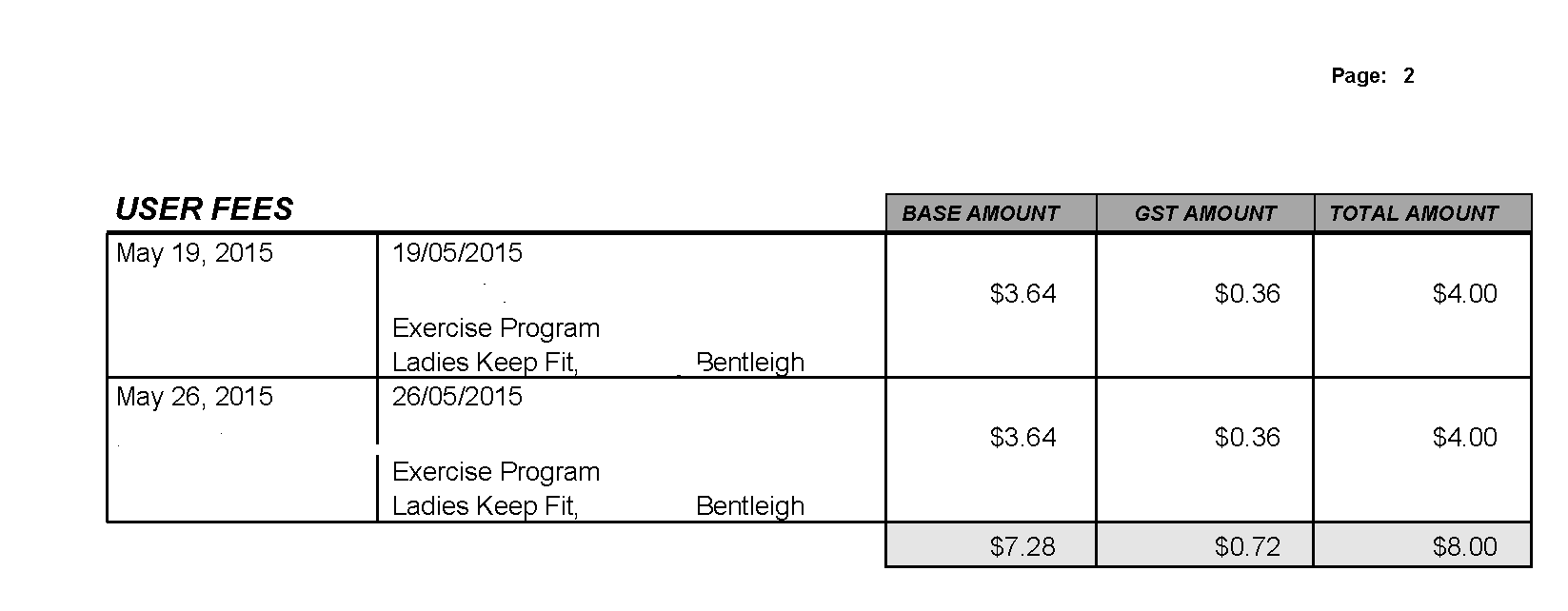
A resident has contacted us asking why Glen Eira ratepayers should be subsidising residents from other municipalities. This is not the first time this issue has raised its ugly head. Remember the GESAC basketball debacle when the ‘contract’ was awarded not to McKinnon Basketball Association but to what can be termed ‘outsiders’. Since then, all quiet on the western front – with no information as to whether all court time is now utilised as per ‘contract’ or whether ratepayers are still ‘subsidising’ the officer decision. Then there’s the issue of GESAC not recognising and providing a discount to countless ‘senior’ residents as other council pools do. And of course, each year admission and membership prices have gone up. Thus this resident’s query and ‘evidence’ presented below –

Hi there love your web site and the debates listed on there. I do have a great thing this so called council has been doing. I was at my grandmother’s place the other day who lives in Frankston and noticed that she had a letter from Glen Eira Council. Being a rate payer myself the curiosity got the better of me and had to have a look to see what it was. It was a bill for exercise classes. I questioned my grandmother what this was and she informed me that she goes to exercise classes some where in Bentleigh which is subsidised by the Council. My question is why as a rate payer are we subsidising people from other municipality to use Council services? I asked my grandmother if there were are clients that did not live in Glen Eira and she said there is quite a few in her class.

000027106_Page_2

Bayside council is currently undertaking community consultation on its draft C140 Amendment which will apply to areas zoned Neighbourhood Residential. Aside from the content, the methodology of this consultation stands in stark contrast to current practices in Glen Eira. Please note:

  • An online survey
  • An 8 page explanatory booklet in plain English
  • Clear explanations on the website – Glen Eira residents have to be ‘satisfied’ with the regurgitation of incomprehensible jargon contained in the public advertising and with only a link to the department as follow up!
  • Formal submissions
  • Links to documents

Source: http://www.bayside.vic.gov.au/caring_for_bayside/6801.htm

This amendment seeks to:

  • Limit subdivision size to 400 square metres. Glen Eira has no minimal subdivision size. In fact, Council granted 487 Neerim Road permission for 8 subdivisions. These all ranged in size from 199 square metres to just over 200 square metres! With no minimal subdivision size, this means that it is hypothetically possible for landowners and developers to subdivide and then subdivide again. In other words – 4 dwellings on a lot instead of the much vaunted 2 dwellings per lot. We expect developers to cotton on to this loophole very soon.
  • Permeability of 35%. Glen Eira prides itself on achieving that massive percentage of a piddling 25% which has been in place since 2004 and we wonder how hard our ‘negotiators’ really tried to increase this quotient! Please remember that there are other councils with as much as 40% permeability requirements!
  • Private open space to equal 75 square metres – a minimum of which must be 60 square metres and 5 metres wide. In Glen Eira, residents are stuck with – “An area of 60 square metres, with one part of the private open space to consist of secluded private open space at the side or rear of the dwelling or residential building with a minimum area of 40 square metres, a minimum dimension of 4 metres and convenient access from a living room”.

Bayside is also basing its draft on a 2012 Housing Strategy and is currently reviewing its Planning Scheme. Again, compare and contrast with what Glen Eira is doing!!!!!

Carnegie’s 1880s Frogmore House tower demolished after being deemed unworthy of heritage protection

The historic Frogmore House tower in Carnegie has been demolished. Picture: Valeriu Campa

The historic Frogmore House tower in Carnegie has been demolished. Picture: Valeriu Campan.

THE tower at Carnegie’s historic Frogmore House has been demolished.

The 1880s feature has been bulldozed six weeks after Glen Eira Council deemed the property unworthy of local heritage protection.

Glen Eira Residents Association president Bette Hatfield said it was “an absolute disgrace”.

The bulldozers were sent in after an unusual, split council vote was won by just three councillors.

Crs Michael Lipshutz, Neil Pilling and Jamie Hyams voted to abandon plans to protect the property.

The site post bulldozing. Picture: Valeriu Campan.

The site post bulldozing. Picture: Valeriu Campan.

The Frogmore House site when demolition began earlier this month.

The Frogmore House site when demolition began earlier this month.

Councillors Thomas Sounness, Oscar Lobo and Karina Okotel had wanted other options explored; Mayor Jim Magee was absent and Crs Mary Delahunty and Margaret Esakoff declared conflicts of interest and did not vote.

More than 1000 residents had petitioned the council to save Frogmore House.

New owner Jewish Care will now redevelop the 7,917sq m site into a 120-bed Jewish aged care centre.

++++++++

And the current online comments –

Two of the councillors who opposed the heritage listing appear to have Jewish surnames?

How is it we live in a world where 1000 people want this historic 1880 building saved and it is not considered worth saving ? We have so many conflicts of interest and back room deals going on and the end result is another piece of history gets bulldozed

what no Australians allowed what a disgrace

A disgrace. We have sold our souls in melbourne. Anything can be demolished.

Yes i wish they would demolish councils full stop

Untitled

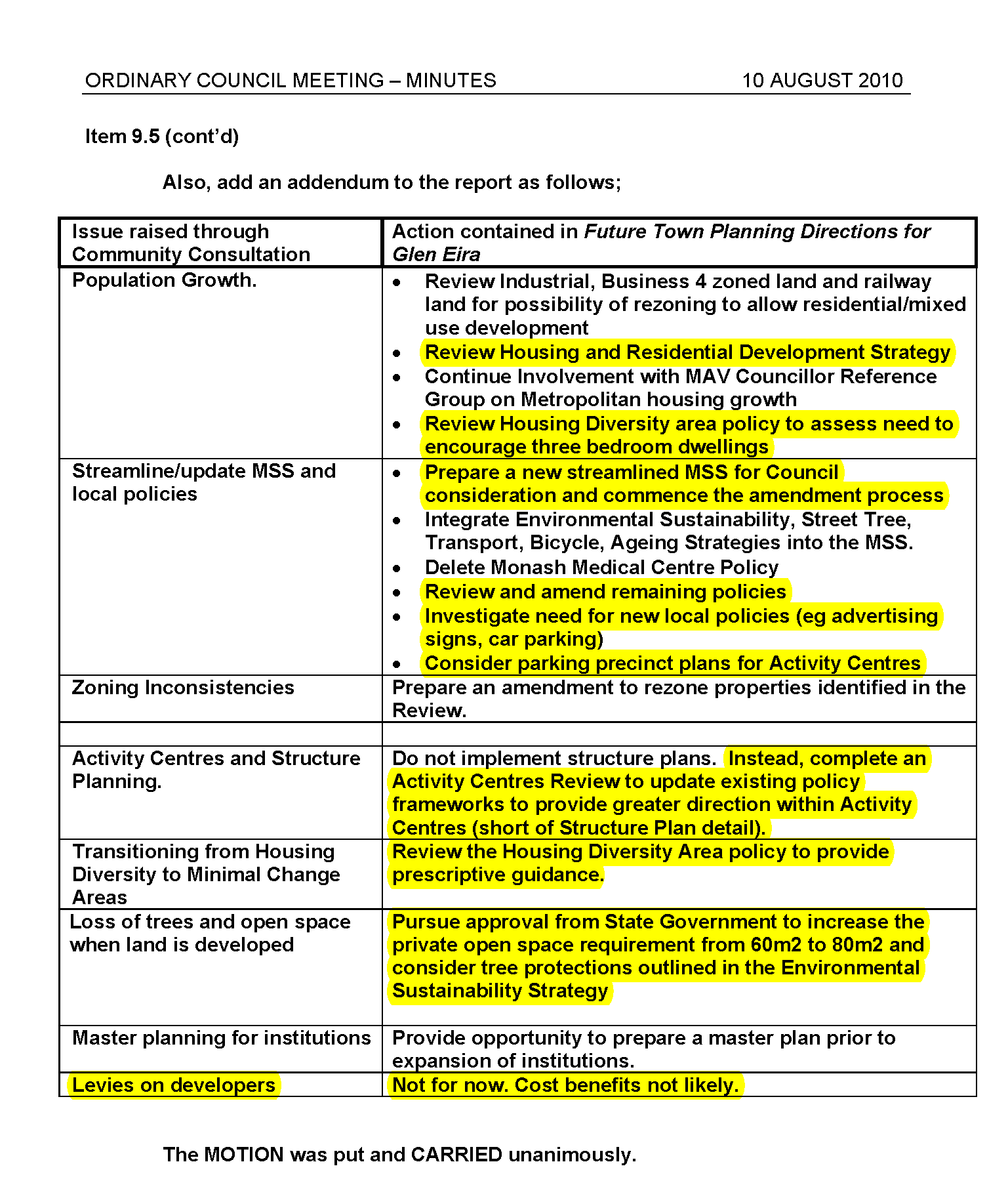
The last Planning Scheme Review was conducted in 2010, with a Discussion Paper, that was anything but a genuine discussion paper. Crucial issues were ignored; information was scant and skewed; and all subsequent actions were to be done ‘internally’. That is a euphemism for non-community participation! When the ‘review’ finally made it onto the council agenda, the resolution endorsed the ‘action plan’. Of course, barely a fraction of what was promised 5 years ago has been done. Now we have the situation that this out-of-date Planning Scheme will not be ‘reviewed’ for at least another 18 months – and that’s on top of councillors knowing full well that there are so many deficiencies that the whole scheme requires immediate attention and amendment. But what has Council done? Asked the Minister for a two year extension on having to review the scheme. The Minister agreed to a one year extension. Thus residents have seen their suburbs destroyed because of the failure to act and close off the countless loopholes that ensure developers will get what they want.

Below is a page taken from the 2010 item on the Planning Scheme Review. It illustrates perfectly how resolutions in Glen Eira mean absolutely nothing. They are continually ignored and consigned to the dustbin of history, or overturned when it suits those with vested interests – ie removal of the conservatory in Caulfield Park; heritage protection for Frogmore; creation of a significant Tree Register. But none of these betrayals equals what has been happening (or more correctly, not happening) in the domain of planning. The highlighted sections of the image below indicate what was promised 5 years ago, and many even repeat what was stated as ‘action items’ from 2003! That’s what resolutions mean in Glen Eira – bugger all. Please remember this when you vote next year!

Pages from 2010August10-2010-MINUTES

Hyams moved to abandon amendment plus ‘affirming’ Amendment C75 (which set up the C1 in the centre and 10 storey heights) and Plan Melbourne. Lobo seconded.

HYAMS: went basically went through the officer’s report outlining the history of the site and what occurred with C75 amendment in 2010. There was ‘maximum of 2000 square metres of retail’ with this amendment so that ‘it would service the people who work there’. Council sent 600 notifications and got 15 submissions – objectors didn’t turn up to the Panel hearing. In 2012 Minister changed zoning and now developer wants to put up to 1250 apartments and 12000 square metres of retail. Said that there are two options before council – to send to a panel or abandon amendment. On officer’s recommendation to go to panel said that this was ‘not an unreasonable recommendation’ because that would mean ‘we do some more investigation’ and the panel would ‘weigh up’ the evidence and make their own recommendations which council is then ‘free to accept or reject’ or modify. It then goes to the Minister. However, he thinks that sending it to a panel ‘would be a waste of everyone’s time and money and effort. ‘ Claimed that this view was only formed ‘late last week’ after he read the objections. In fact, ‘I can’t see myself ever supporting what the applicant is asking for’. Has ‘grave concerns’ about the ‘residential component’ and the impact on traders and ‘allowing this to proceed to the Development Plan Process’. Stated that Gillon ‘proposed’ that the amendment be changed to 1250 apartments but officers’ advice was that this may not have ‘statutary weight’. He thought that even 1250 and 3000 people is ‘still too many for this site by a long way’.

Unlike Caulfield Village this isn’t a ‘transport hub’ with only buses and would ‘increase population’ by 10% in East Bentleigh, plus the retail component could do ‘significant’ harm to local traders and shopping strips. Said council received a ‘peer review’ on the applicant’s retail impact statement and that ‘points out’ that shops ‘on the border of Glen Eira’ were ignored by the applicant’s consultants.

Said that ‘neither’ the residential or retail ‘fit our strategy for this site’ which is for Virginia Estate to ‘continue to be an employment hub’. His ‘concern’ with the Development Plan process was that if the amendment is passed and they make a ‘subsequent decision on the Development Plan’ that is ‘ultimately reviewable by VCAT’ and ‘I absolutely have no faith in VCAT’. He wants ‘something of this significance to remain under Council control’ and not the ‘whims of VCAT’.

On the survey it was ‘not from Council’ and people have two choices – either they believe it is a conspiracy or incompetence and he sees it as incompetence because he doesn’t believe that ‘the applicant actually intended to mislead’ people. But ‘the nature of the questions’ were ‘fairly distasteful’ and ‘designed to produce the desired outcome’. But ‘distasteful as is it’ they ‘don’t make planning decisions to punish’ people and so ‘this hasn’t influenced my decision’.

Wanted to address some comments made at the Planning Conference. Once was from Staikos who ‘said that it is the new planning zones that are causing development’. Said that ‘our new planning zones are not causing development’ since apart from ‘one small patch’ developers can’t build what they could before and there’s only been a ‘rush in development’ between the announcement and the gazetting because developers tried to get their applications in on the old system. Others question why council is ‘only getting 5.7%’ as an open space levy. Said that ‘experts’ determined how council ‘could get the most money’ and they said that a ‘flat rate’ for all areas was better because if they wanted more for sites such as Virginia Estate then ‘we couldn’t have got’ the 5.7% for the rest of Glen Eira. In fact the ‘person who raised that at the conference was responsible for holding up’ the amendment and costing council ‘one million dollars’. So ‘that’s what you call chutzpah’.

Now the applicant can ‘get on’ with developing the park according to Amendment C75 ‘which is in accordance with our strategy’ or they can put in a new amendment together with a planning application and ‘that way we know what we’re getting’.   This was one major cause for worry for residents and councillors because ‘beyond broad parameters’ no-one knows ‘what they’re getting’. So with an amendment and planning application ‘we know what we’re getting and we make the decision’ and ‘not VCAT’.

LOBO: ‘I rise to speak for the people of East Bentleigh’. ‘People elected me to represent them and I will’. Said he won’t support amendment because ‘people do not want’ it. ‘My loyalty is towards the people of East Bentleigh’.

PILLING: said he chaired the planning conference which was a ‘good meeting’. Wanted to thank the community for their input. Said he supports the motion for 2 ‘chief’ reasons – lack of public transport and it’s not like the Caulfield Village which has a major transport rail line. Other reasons was ‘concern’ from the traders’ associations. The amendment isn’t ‘suitable and doesn’t fit our strategy’. Agreed with Hyams on the new zones that ‘you can’t get something now that you couldn’t before’ and that ‘you could probably get less now’. Plus ‘drawing a long bow’ then all parties at federal level are responsible because they ‘encourage population growth’. ‘Our job is to manage that population growth and set standards’. There’s been a lot of ‘criticism’ of council. Most ‘constructive’ but some ‘over the top’ and that’s like ‘criticising an umpire before the decision is made’. ‘Overall’ he ‘welcomes the community’s input’.

DELAHUNTY: said that in ‘making my mind up’ she is concentrating on ‘three particular areas’ – strategic reasons, planning reasons and community input. If she lets this go to a planning panel then didn’t think that she would be ‘upholding’ the premises of ‘local government’ – ie ‘listen to the community’ and then apply the strategic and planning ideas. Said mainly to the ‘applicant’ that when ‘you seek community consultation’ this must be done with ‘integrity’ and is ‘about a two way conversation’ and not just about ‘telling the community what you are about to do’. So it’s listening, ‘taking on board’ what people say and then ‘making some changes along the way’. Conceded that there ‘had been some belated attempts to do so’ and she commended the applicant on that. SAid that the Municipal Strategic Statement from the planning scheme identifies this as moving from industrial to a ‘really important employment node’. Said that ‘I don’t see any strategic reason’ why this objective should ‘go’. On planning grounds, if there is to be the upholding of this site as an employment zone then ‘commercial 2 is the best way to do this’. So, ‘I don’t find that there are planning reasons to move this forward’.

LIPSHUTZ: said that he suggested at one point that a panel would be the ‘best way to go’ so that residents could go and make submissions and it would come back and ‘we could look at it’. But he then ‘thought’ about it and decided that even if it went to a panel “I couldn’t support it, so why go to a panel in the first place?’ Repeated that ‘we intended this to be an employment hub’ and won’t be ‘under this proposal’. ‘I don’t think you can trust what the developer has said’. Hyams said incompetence, he suggests ‘conspiracy and they’ve been ‘deceptive’. Said there’s been ‘bandied around’ 4000 and 1250 units but ‘I don’t know what’s going to happen and I don’t trust them’. But ‘that’s not the reason’ why he is voting as he is. This ‘isn’t C60’ and isn’t CaulfieldStation and it will ‘kill business in this whole area’. Said he wanted to see the area ‘developed’ and for it ‘to go forward’. ‘Not something that is forced on the community’.

SOUNNESS: Said he was sure that the applicants don’t consider the issue as ‘dead’ and there will ‘have to be a discussion and the presentation of something new’. For people in the gallery there ‘will be more discussion in the future’ on ‘how is this going to be the best thing for Glen Eira’ and how ‘to meet the needs and expectations of residents’. He expects the applicant will now ‘have a chat’ with the community and officers. Suggested that ‘you maintain an eye out’ and ‘stay aware’ of any developments and ‘be part of the conversation’. It’s the ‘applicant’s land’ but ‘your city’ and the job of council is to ‘mediate’ between the two to achieve the best outcome. Said there are gaps in the planning scheme and that’s made him ‘uncomfortable’.

ESAKOFF: said that this has a ‘long history’ and she remembers her childhood when it was W.D & H. Wills. Glad that there has been such a great response from the community because it’s been a ‘terrific exercise in community consultation’. The amendment ‘doesn’t meet council’s strategic planning’ or council’s ‘sustainable transport’ strategy that seeks higher density in transport hubs. This isn’t one of those transport hubs. Admitted that council ‘tried hard’ to get the bus to go down East Boundary for GESAC but ‘to no avail’ and if council ‘can’t get it’ she didn’t know how the developer could.

OKOTEL: thanked both applicant and residents for the ‘amount’ of ‘information that was provided’ because ‘this was critical in our decision making’ and ‘helped us raise questions with the officers’ . Agreed with others and mainly about the impact of ‘density’ and what this means for residents in the area in terms of ‘traffic and infrastructure’. Even though she wasn’t a councillor when C75 came in, she thought this was a ‘better fit for the area’ than leaving it as ‘industrial’. However, ‘changing the zoning would lead to over-development’ and therefore can’t see ‘any reason why’ the amendment should go to a panel.

MAGEE: said that in his 7 years on council ‘nothing has scared me more’ than this. He lives in East Bentleigh and the weight of the decision meant many ‘sleepless nights’. Accepted that the ‘developer’ is trying to ‘maximise the return on his investment’ but the ‘cost is our community’. East Bentleigh was the most liveable city but not if this goes through. ‘Something will be built on this site’ but if it’s about ‘land’ then every inch is important in Glen Eira. Said that council has to ‘maximise’ open space ‘where we can’ but ‘more importantly we have to maximise the amenity’. We know that there will be ‘change’ because there are 1000 residents each year who ‘want to come and live with us’. SAid the developer has to think whether it’s all about ‘maximising’ profit or also giving residents ‘something that benefits them’. Amendment C75 is not ‘in place’ and thought that ‘we will be back here in 18 months time’. Ultimately ‘it’s about maximising the best use of the land’ and he doesn’t ‘want this change’.

MOTION PUT AND PASSED UNANIMOUSLY (APPLAUSE FROM GALLERY)

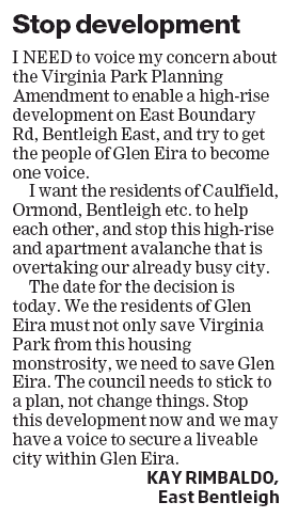
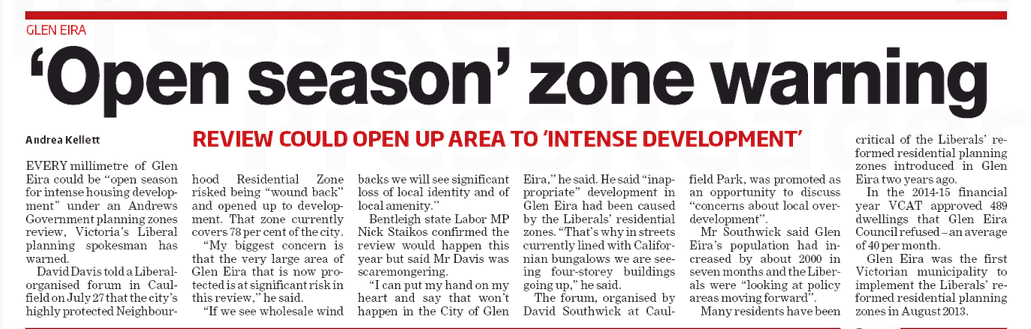
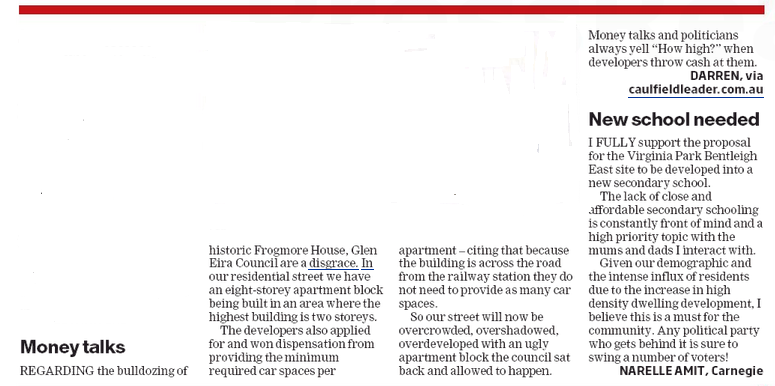
Planning Permit Activity reports are now available for the entire financial year of 2014/15. The figures represent ‘net new dwellings’. From July 2014 to June 2015, another 2885 dwellings have received permits. This is on top of the 1713 from the previous year. Population projections for Glen Eira tell us that in order to meet housing needs the municipality will require 9000 new dwellings by 2031. Since the zones have come in the numbers have gone through the roof – 934, 1713, and now 2885 – for a grand total of 5532. Hence in the space of three years Glen Eira has achieved an average of roughly 1800 dwellings per year – triple what is stated in the fossilised Planning Scheme. At this rate, the 9000 new dwellings will be reached in 2018 and not 2031!

Given these figures, today’s Letter to the Editor, is very relevant.

Untitled

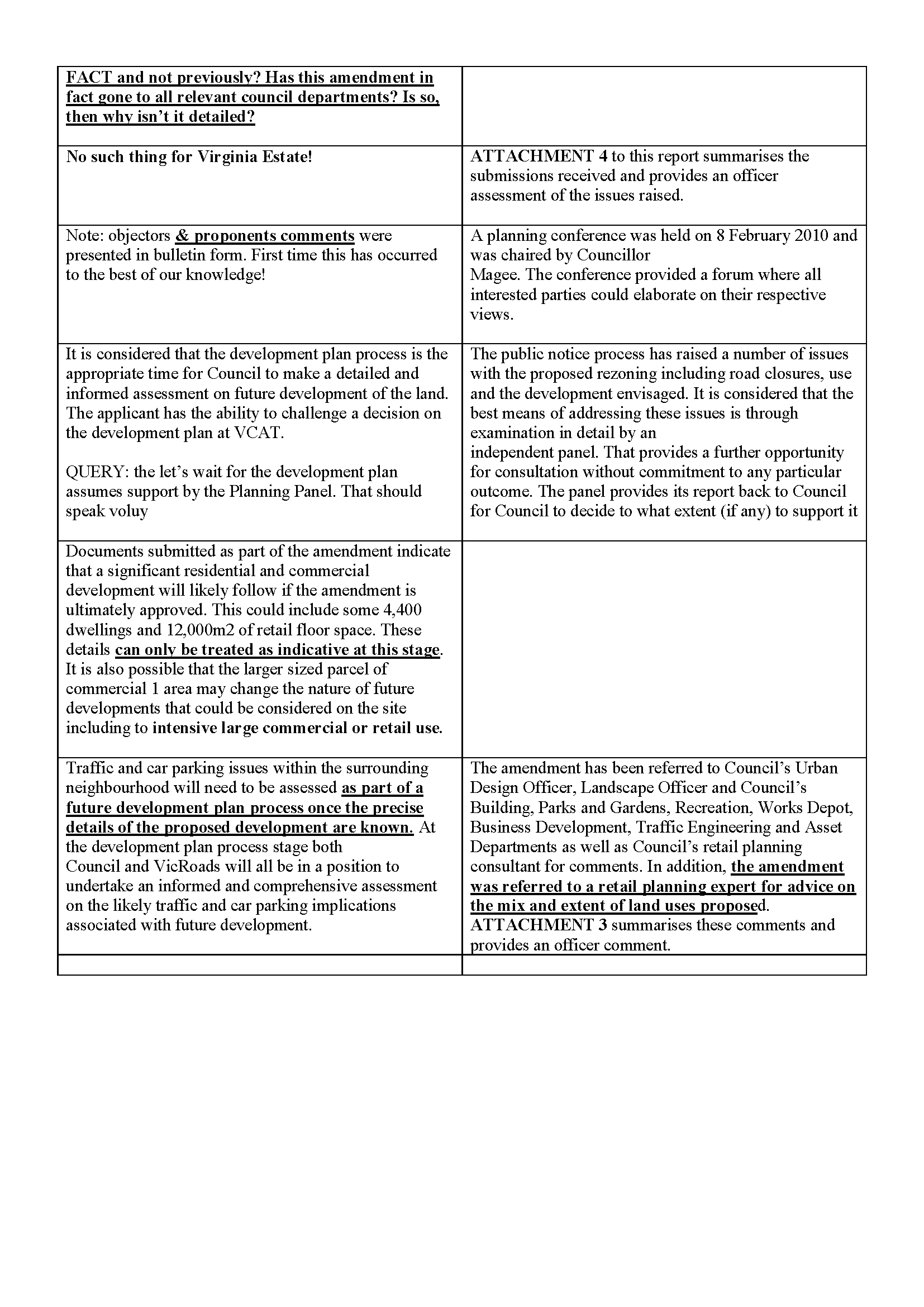
The officer’s report for the proposed Virginia Estate Amendment recommends that the Minister appoint an ‘independent’ Planning Panel. No surprises there! Nor is the ‘quality’ of the report itself a surprise. Once again it is short on justification, short on comprehensive analysis, and most importantly fails to adequately address and answer residents’ concerns.

By way of contrast, we feature below the officer’s report from 17th March 2010, which recommended sending the Caulfield Village Amendment C60 off to a planning panel. Whilst this Amendment itself is steeped in controversy and back room wheeling and dealing, we ask readers to carefully consider the far greater detail that went into this report – in contrast to what’s been dished up now with the Virginia Estate amendment. We also acknowledge that the C60 was based on what was called an ‘incorporated plan’ rather than a Development Overlay as with Virginia Estate. However, the end result is basically the same – ie setting height limits, etc and both needing a Development Plan in the future.

Please compare the two and note the details that are lacking for this current amendment. It highlights once again in our view:

  • The failure to present all the relevant information
  • Questions need to be asked regarding how ‘unbiased’ and ‘objective’ the report actually is?
  • And the most vital question – why are residents once again ignored, spurned, and not listened to?
  • FYI – we’ve uploaded the officer report HERE

VIRGINIA ESTATE_Page_1VIRGINIA ESTATE_Page_2

« Previous PageNext Page »