GE Consultation/Communication


PS: congratulations to the residents of Claire St, McKinnon. VCAT has refused a permit for the three storey development. We have uploaded the judgement HERE. Readers should take careful note of the member’s comments. The development was refused primarily because of developer greed and not thanks to council’s planning scheme restrictions. We also have to speculate as to the role that massive tv, radio, and press coverage had on this outcome. Perhaps a lesson for all residents? The problem of inept zoning and schedules still remains!
letters

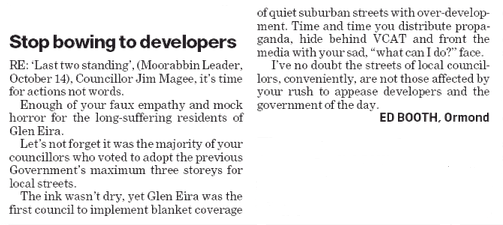
Mr Booth’s comments are surely warranted when we analyse what has been happening in Glen Eira. There has been a remarkable drop off in the number of applications that come up for Council decision. The reason isn’t less applications, but the fact that Council is now refusing outright via manager or through the Delegated Planning Committee process, application after application. Why? So that council can continue with its nonsense such as blaming VCAT for everything instead of doing what it is paid to do – implement a planning scheme that is worthy of that name.

We have commented numerous times here on the ridiculous decisions made by council planners. Either the application is refused, or conditions imposed that have no hope of getting up because they are not supported by the planning scheme. The latest example is a VCAT decision for 130 Murrumbeena Road, Murrumbeena. It is zoned GRZ1; is within the Neighbourhood Centre; is less than the 10.5 metre height maximum, and proposes 16 dwellings on a 880 square metre block.  Council refused the application and VCAT granted a permit. What residents need to appreciate is:

  • according to the planning scheme there was no logical reason to reject this application
  • the imposed conditions are not supported or even part of the planning scheme
  • Result? More ratepayers money thrown down the drain so that council can pretend it is doing its job properly!

Please consider the VCAT member’s comments carefully and then decide who is the real culprit – VCAT or Council? Mr Booth’s comments of ‘hiding behind VCAT’ are indeed appropriate!

Council says that local policy requires a transition in height and scale from the commercial centre to the edge of the housing diversity area. It says a three storey building on a site near the outer edge of the activity centre does not respect the transition that is sought. Consistent with the Tribunal’s findings in Pitard Knowles Pty Ltd v Glen Eira CC, I am not persuaded by this proposition. The preference for a transition in scale is one of many strategies in clause 22.07 and it has no more or less weight than the others. It must be applied contextually. There is no guidance in clause 22.07 as to where a transition applies. Is it halfway between the core and the outer boundary, or two thirds or another distance from the centre? Is it to be defined by streets? What is required in transition in height, and from what? Does the transition also apply to front setbacks, width of facades, landscaping, fencing and streetscape rhythm. The general policy is unhelpful in this matter, and Council has not prepared urban design frameworks or Overlays that might have provided greater guidance.

The little guidance on the matter of transition is provided by the distinction between the schedules to the GRZ. Schedule 2 to the GRZ is a transitional area because the maximum height in the GRZ is lower than the GRZ1. It is notable that the GRZ2 applies only to lots that directly adjoin land in the NRZ, and it applies to land of one lot in depth. Council has effectively defined the area where a transition in height and massing might be expected to be only the lots at the outer edge of the GRZ1 area.

ON SETBACKS TO UPPER LEVELS

Secondly there is no policy basis, urban design framework or DDO that requires a recessed second level, and the building would be lower than the maximum height allowable under the schedule to the zone. Requiring a setback would be arbitrary and it does not respond to any clear built form or policy directive or amenity consideration

Source: http://www.austlii.edu.au/au/cases/vic/VCAT/2015/1729.html
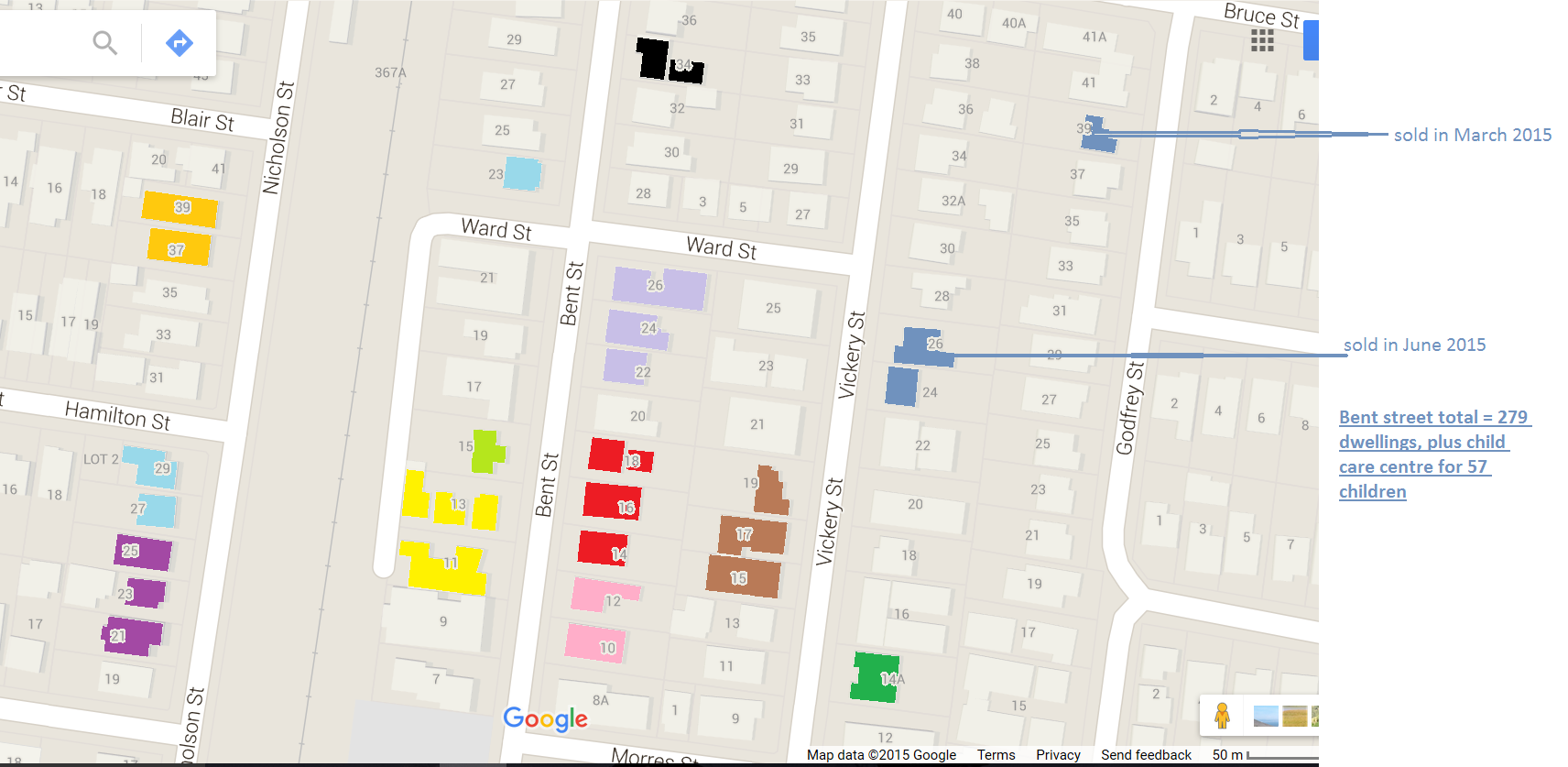


bent st

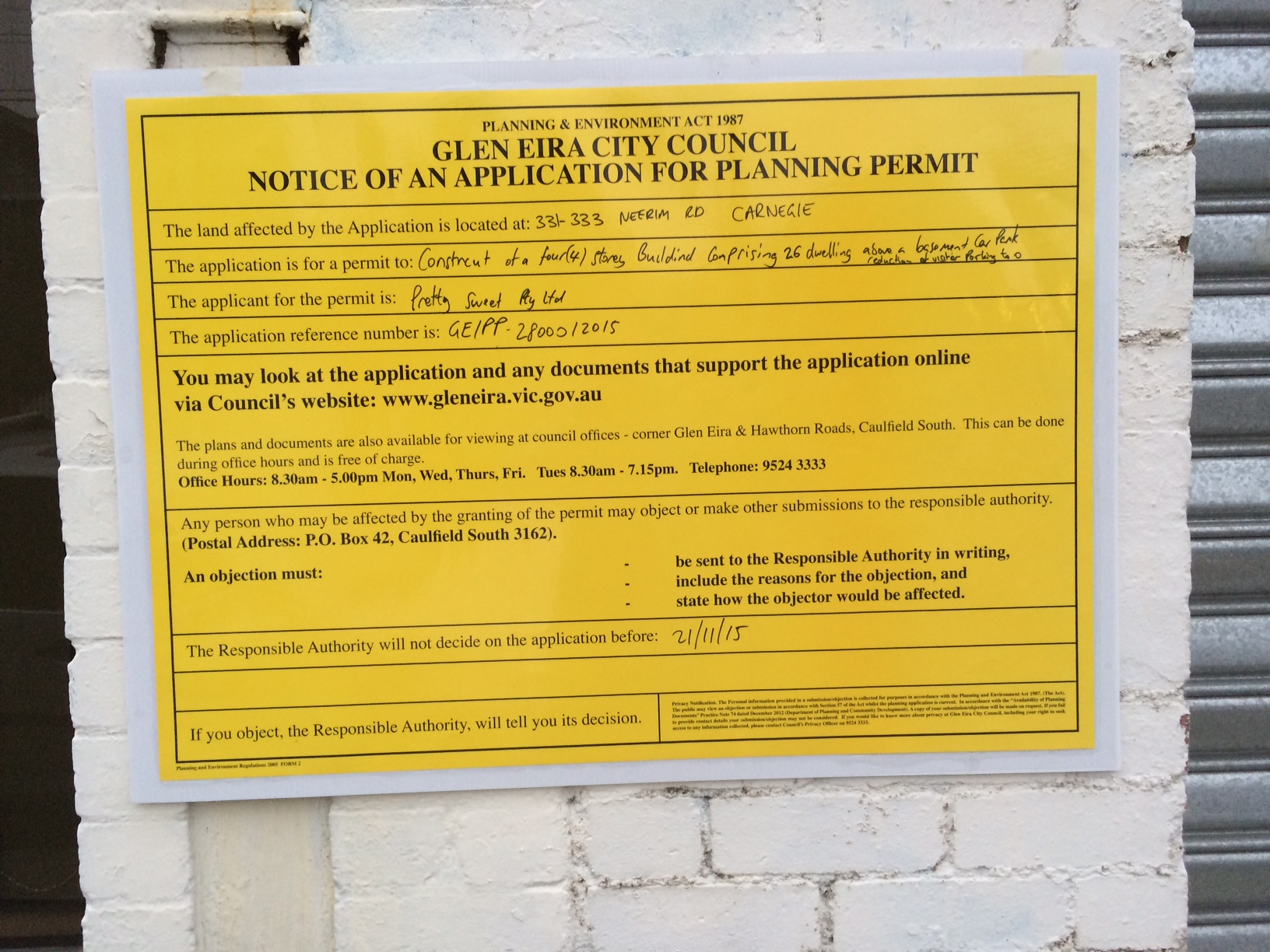
PS – AND WE MUSTN’T FORGET THE DISASTER THAT IS NEERIM ROAD!
neerim

Please consider the lists provided below which highlight the various amendments that neighbouring councils have initiated in the past 2 years – since the zones came in – in contrast to what Glen Eira has produced.

BAYSIDE

Amendments c112-115 – introducing mandatory height limits into activity centres (ie includes commercial as well)

Amendment – c121 – extending their Water Sensitive Urban Design policy

Amendment C139 – Development contributions levy

Amendment C140 – Bayside Housing Strategy of 2014 & subdivision size of land

And plenty of new heritage overlays on various properties and areas

BOROONDARA

Amendment C108 – permanent Design & Development Overlays in many areas

C109 – extends interim height controls for Neighbourhood Centres (ie includes commercial)

C139 – more structure plans and design and development overlays

C149-C152 – more heritage overlays

C152 – Maling Road ‘building form guidelines’

C229 – amends council’s LPPF (local planning policy framework)

STONNINGTON

C153 – design and development overlay

C154 – Chadstone expansion includes Incorporated plan for the land

C155 – development overlay for heights along Yarra

C168 – 2 new Neighbourhood Character overlays and development overlays

C172 – Chapel Revision Structure Plan

C175 – updates Municipal Strategic Statement plus new neighbourhood character policy

C177 – environmental sustainability design

C180 – public acquisition overlay

C181-184 – various heritage overlays

C185 – 2 new Neighbourhood character overlays, design and development overlays and their integration with zoning for GRZ sites

C186 – open space levies where 4 suburbs are paying 8% – South Yarra, Windsor, Prahran, etc

Many new heritage overlays here.

C212 – Malvern Road Neighbourhood Structure Plan

C217 – more significant character overlays

C220 – extension of structure planning controls for Windsor, Prahran, South Yarra

GLEN EIRA

C100 – Rezones Industrial 3 To Mixed Use Zone (Neerim/Emily St)

C102 – Revises Non Residential Uses In Residential Zones Policy

C107 – Neighbourhood Character Overlay (Schedule 2) To Moodie St., Caulfield East

C113 – Heritage Overlay On Some Sites In Caulfield North

C120 – Open Space Levy Of 5.7%

C121 – North Road Sites From Commercial 2 To Mixed Use Zone

C123 – Updated Child Care Policy

C130 – Environmental Audit Overlay In Glen Huntly

C135 – Public Acquisition Overlay On Magnolia Road

C139 – Rezone Glen Eira Rd/Hotham St Corner From Commercial 2 To Mixed Use Zone

C140 – Public Acquisition Overlay On Mimosa Road/Mile End Road

AND THE ATTEMPTED VIRGINIA ESTATE AMENDMENT THAT WOULD YIELD 4,600 DWELLINGS!

COMMENT

  • Rezoning to MUZ or Commercial means more residential high rise
  • Magnolia Road public acquisition overlay was gazetted in August. Three months down the track and the property still hasn’t been purchased for open space. There was a public acquisition on this property for years, then removed in 2008, and then re-imposed. Superb planning and now we fear that council simply does not have the money to purchase anything.
  • ‘reviews’ of child care policy and non-residential uses, simply changes the playing field – now making it easier for such developments to encroach into Neighbourhood Residential Zones.
  • Planning Panels have recommended a total review of Heritage. The current policy dates back to 1996. Another museum piece!

Conclusion? Whilst other councils have been busy shoring up their defences against over-development, and rejecting Planning Panel decisions and pushing ahead for Ministerial approval of their amendments, Glen Eira continues in the same old fashion – tinkering and avoiding anything that might constitute an obstacle to development.

For months now, some councillors have been voicing concerns about Glen Eira’s planning scheme, the zones, the way they were introduced, plus the lack of necessary ‘tools’ that council could use in determining applications. Residents themselves have taken to social media, with petitions, comments, and demands. We have consistently reported on VCAT decisions that make it abundantly clear how inept and lacking Council’s planning scheme is. People are angry and getting angrier at what they see as the destruction of their neighbourhoods and their lives.

So how do our councillors respond to this ground swell? More empty talk, more ‘we should do this’, but absolutely, no firm action from any of them! Words are cheap and ultimately useless. What is required is a simple council resolution which orders the pen pushers to get off their backsides and to immediately put the planning scheme on the table for intense and full, honest consultation with residents. Or will we continue to have more hand wringing, more crocodile tears, more blaming of VCAT, more ratepayers’ money being thrown down the drain with public relations disasters intended to excuse 13 years of negiligent planning under Newton?

Tuesday night provided some further examples of ‘we should’. As we’ve already said – talk is cheap. It is now, with the election year looming, time for action! Here’s a report on some of the comments that were made on several items.

LOBO – thought that it was time to ‘review policies’ following Plan Melbourne’s release and how the government is expecting over 7 million people in Victoria. Said it was also important to ‘review our Municipal Strategic Statement’ that ‘was adopted by council on 17th May 1999’, and accepted by the government on 5th August 1999, 16 years ago’ and in ‘light of the boom and new residents’.

SOUNNESS: said he was ‘concerned’ that even though the VCAT member rejected the 16 storey application in Egan St., Carnegie, he still stated that the height was acceptable. This then leads onto the question of an urban design framework that looks at traffic, “what’s the shape of a city’ and where density should go and ’16 storeys doesn’t meet that criteria’. And there is also a paragraph in the VCAT member’s judgement that notes ‘the absence in the scheme that provides guidance about these areas’. The decision then talks about ‘first principles’ and the design guidelines for high density developments. There is also discussion about how the Carnegie area is ‘undergoing substantial change’. He is pleased that the application was refused, but strictly on amenity design and ‘not the other features’. For him ‘a village is not 16 storeys’. ‘I have some concerns about how council’s policy framework is directed’ and that there is a ‘due process to go through in reviewing planning schemes’ and for those sections in the planning scheme that involve ‘urban villages’. He ‘hopes’ that there can be a ‘conversation about that earlier rather than later’ because if these sorts of applications for 16 storeys comes in then they are not appropriate.

HYAMS: also didn’t think that 16 storeys was appropriate and that ‘Mr Torres has assured us’ that this is against the ‘policy for the area’. Also if VCAT is ‘incapable of interpreting our policy’ then maybe there needs to be ‘policy that VCAT can understand’ so there is some ‘work that we need to do’.

We remind readers of the following facts:

  • The Planning Scheme was allegedly ‘reviewed’ in 2010. This was, in our view, not a real ‘review’, but a predetermined decision to do very little except tinker with the edges.
  • Council (or some anonymous officer with no delegated authority) applied for an extension so that more years could pass before the scheme was touched again. There was no council resolution on this and no rationale for why another two years of delay was sought. The Minister granted council an extra year.
  • That would take any review well into 2017 – plenty of time for suburbs, streets, and amenity to be ruined.


ITEM 9.4 – APARTMENT BOOM

Hyams moved motion to accept. Seconded by Pilling

HYAMS: started off by saying that there had been a lot of ‘misinformation’ about council’s planning zones and this was due to real estate agents doing it for ‘profit’ or others for ‘political reasons’ or still others just ‘to make mischief’. Thought it ‘was important’ that residents ‘understand the causes of what is happening in neighbourhoods’ and the circular makes this ‘very clear’. What’s happening is not just in Glen Eira but everywhere and it’s happening even more in other municipalities. The circular also points out ‘what we’re trying to do to manage the growth’. Said that if people are ‘concerned’ about the growth then they should look carefully at the revised Plan Melbourne discussion paper especially the ‘ways of allowing more housing’ in the middle suburbs and the possibility of ‘code access’ for 3 storey apartments. This means that there will be no notification and residents won’t even know that an application has gone in.

PILLING: agreed with Hyams and that this ‘has been discussed’ many times. It was good for council to ‘circulate this letter to residents’ and it was 11 cents and ‘wasn’t paid out of rates’ but fines. This is all about ‘population growth’ and council’s ‘role is to set boundaries’ and they have done this ‘with the zones’ where population growth is concentrated around public transport hubs, shops, whilst ‘keeping the majority of the municipality’ protected. There has been a ‘lot of misinformation’ but the ‘leaflet sets it out clearly what council’s role is’. Growth is happening everywhere and Glen Eira is ‘relatively low down the list of 4 storey apartments’. Carnegie isn’t ‘surprising’ but other municipalities have far more. Thought that ‘we’ve got the mix right’.

LIPSHUTZ: the circular is ‘very timely’ given the discussion paper about Melbourne growing ‘up rather than out’. Council’s job ‘is to inform’ people and this explains ‘development in our city’. It’s ‘not because of the zones’ because it is ‘throughout Melbourne’. Said that people ask ‘why are you doing this’ and how much time is spent and ‘I would answer’ that less time is spent doing this than ‘answering public questions’ that are ‘designed to embarrass council’. Said that people have come to him, who previously ‘criticised this’ and now said ‘sorry, we’re wrong’ we can ‘now see what you’ve done’ and see what ‘we’re facing in Melbourne’. ‘Our role is’ giving ‘information as well as communication’ and this is what the circular does.

OKOTEL: said that this goes ‘a long way’ in meeting the areas where council is ‘falling short’ – ie communication. The Community Satisfaction Survey cites planning, transport and communication as the areas needed to improve. Residents have ‘voiced appreciation’ for council publishing this. There ‘will be mixed views in the community’ but ‘as a council we do try to improve our practices’ and ‘learn from the feedback of residents’. This circular does ‘attempt to meet those areas identified’ in the community satisfaction survey by ‘communicating about planning’.

DELAHUNTY: thought that Okotel’s point was ‘well made’ about communication. For her, when people talk about zones, what’s missing is the people. ‘These are homes’ and for those saying ‘lock the doors’ then she doesn’t ‘understand’ where people think everyone’s ‘going to live’. ‘We’re not targeting a population growth – we’re accommodating’ the growth. Said ‘we’ve got a responsibility to provide housing’. ‘We can’t lock the doors in Glen Eira – it’s not fair’. Said that we ‘need a good mix of housing’. Council isn’t taking on as many as others and that ‘might be to our detriment or not’. ‘We need to remember that these are homes for people’ and council needs to ‘ensure that they are affordable’ and that this doesn’t ‘unreasonably impact on current situation’. When councillors get emails that ‘high rise’ is going to be next ‘student’ homes then you ‘need to look at the causes’ and this means more social housing is needed. Thought that the ‘information’ sent out was ‘factually correct’ and was ‘worthy of having a conversation about’.

LOBO: said that ‘this report should have come before’ the letter was ‘circulated’ and that would ‘have been much more professional’.

SOUNNESS: said that there is a ‘growth scenario’ and that there are also ‘macro’ issues. Said there’s no view of what the final picture of the growth is ‘going to be’. Acknowledged that people are uncomfortable with certain heights but in Victoria it seems that the view is ‘we can spread out, we can spread up’. The urban growth boundary was supposed to be fixed and not changed and it’s changed continually. The development industry ‘appreciates’ not having ‘firm boundaries’. In Glen Eira there are ‘tools’ that they can deal with things but there are other tools that ‘are not available’. Agreed that ‘we’ve got the factual information out there’ and thought that ‘we’ve doing as best as we can’. ‘We’ve got controls over the majority of residential areas’ and areas where ‘large’ growth ‘can take place’ and council has to limit the bad effects of this and ‘maximise the good’.

MAGEE: said that this has come to a council meeting because of ‘response from the community’. The response has been ‘quite large’ and he got many phone calls and people are ‘really appreciative of some facts’. Said that he’s met with the mayors of Shepparton, Boroondara, etc. and they all say that ‘development’ is their main issue, ‘so it’s no different to what is happening in Glen Eira’. Glen Eira, unlike other councils has ‘actually identified areas’ ‘many years ago’ so the areas for growth were ‘already in place’ long ago. Councils like Boroondara ‘had nothing like that’ – ‘it was all one zone and anything went’. Glen Eira ‘identified many years ago opportunities to protect’ and to ‘direct where development should go’. Agreed with Lobo that it might have been better to have this item discussed before the ‘information’ went out but ‘this is here because the information went out and to respond to the many, many’ residents and to ‘formally acknowledge their responses’.

HYAMS: reinforced the mantra  and said ‘all together now’ (sing song by all councillors) ie nothing can be built now that couldn’t be built before etc. Said that there are ‘people who have their mind set’ that everything bad about planning is ‘council’s fault’ and that ‘you’re not going to change people’s minds’ on that. But the ‘fact’ is that most people have a ‘fairly open mind’ and they ‘want information’ so the circular ‘serves a very important purpose’ in ‘letting people know what’s going on’. It is a ‘hot issue’ and ‘people are crying out for information’ and ‘this supplies it.

MOTION PUT – CARRIED UNANIMOUSLY

In response to a public question Council responded that the cost of printing and distributing the ‘circular’ was $14,355!

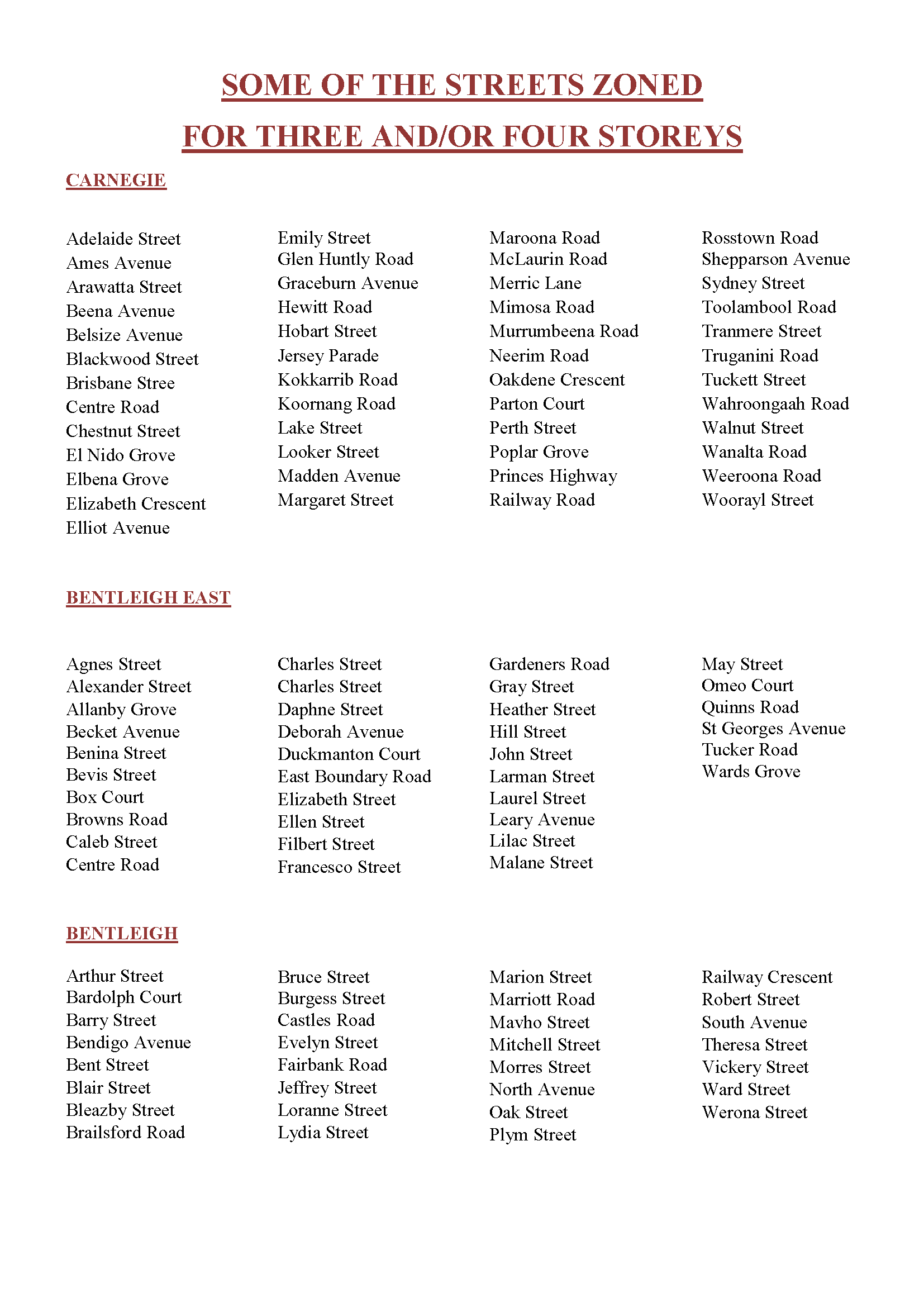
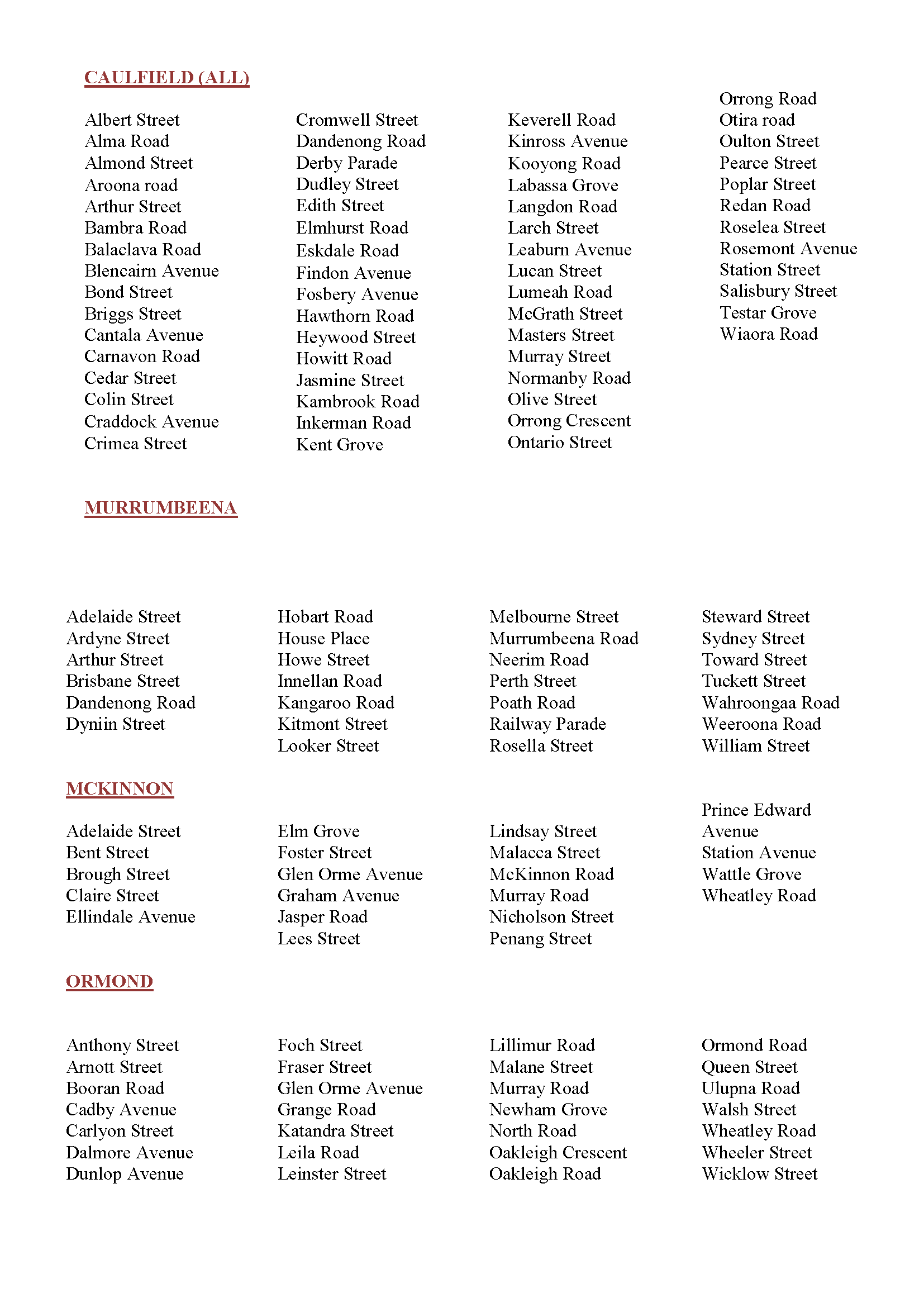
This is a ‘public service announcement’! We are pretty confident that most residents would not have the foggiest as to the zoning of their area – unless they have already been impacted. Much credit for this must go to council in that its maps are illegible and not all streets named. Hence, we thought it worthwhile to pinpoint some of the streets that have now pretty much been given carte blanche for three and four storey developments. If anyone has any doubt that this is the case, then there’s this summation from a VCAT member recently – The two schedules to the zones (GRZ) have similar provisions. Both provide for a building height up to 10.5m and include reference to a lift overrun. This would appear to indicate that apartment style buildings might be acceptable in these areas. (Malina vs Glen Eira – 7th October 2015)

STREETS ZONED FOR THREE AND_Page_1STREETS ZONED FOR THREE AND_Page_2


There has never been such a set of agenda papers as released today, which reveal in full glorious detail everything that is awry in Glen Eira. We will go through each item and pinpoint the atrocities –

Item 9.1 – 68 Kangaroo Rd Murrumbeena.

Application to extend physiotherapy centre from 2 to 5 staff; extend hours, extend car parking. Recommendation – permit be granted with reduced hours.

There were plenty of local objectors to this application and one pro-forma letter supporting application. All well and good. What is not acceptable though is the following –

Under the ‘applicant category’ we get – Susan Ross (formerly) Foresite Planning & Bushfire Consultants (currently). Exactly what does ‘formerly’ mean, or even allude to? Or is this simply council trying to camouflage the fact that Susan Ross was once upon a time employed as a council planner and that the property just happens to be owned by Jacquie Brasher’s (a current employee and strategic planner) husband? We might also query how ‘ethical’ it is for Ms Brasher, whilst still employed by council, to write to objectors?

Item 9.4 – ‘apartment boom’.

This is the ENTIRE REPORT – ‘ANONYMOUS’ reigns supreme again!

Purpose

Council has distributed the attached Circular to all properties in the municipality.

It is self-explanatory.

  1. Recommendation

That the report be noted.

Now wouldn’t an apology for all the bullshit and lies be appropriate here? Wouldn’t it be nice to know exactly how much of ratepayer money was wasted on this fiasco?

Item 9.6 – Transport strategy – draft action plan 2015-1017.

This is the most amazing document of all time. Before we highlight the inanities, it needs to be pointed out that –

  • all references to council’s ‘Road Safety Strategy’ are a misnomer. There is NO CURRENT STRATEGY – IT EXPIRED IN 2012 AND HAS NOT BEEN UPDATED!
  • The action plan is supposed to be from 2015-2017. Yet, some of the proposed actions extend into 2018!!!!!! and even then nothing will happen because only the ‘report’ is supposed to be available.

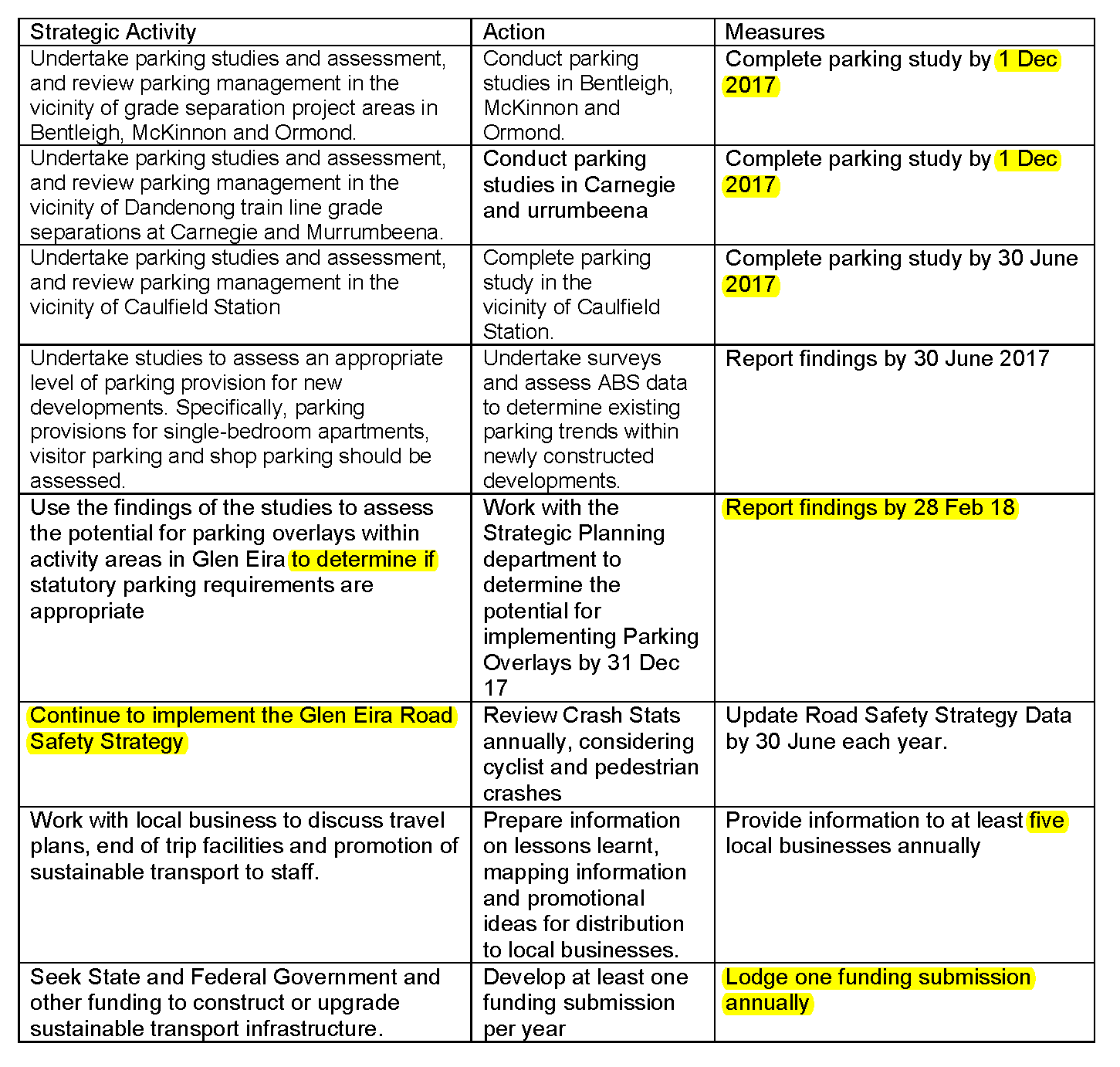
Here are some of the ‘actions’ listed. Please note that the vast majority (which we didn’t include) involve ‘advocacy’ and even this is proposed to take years to figure out what to do! Utterly amazing! It is also stunning that it will take years to do a traffic analysis! In short, great on empty, meaningless promises and very, very short on real action!

Strategic Activit1

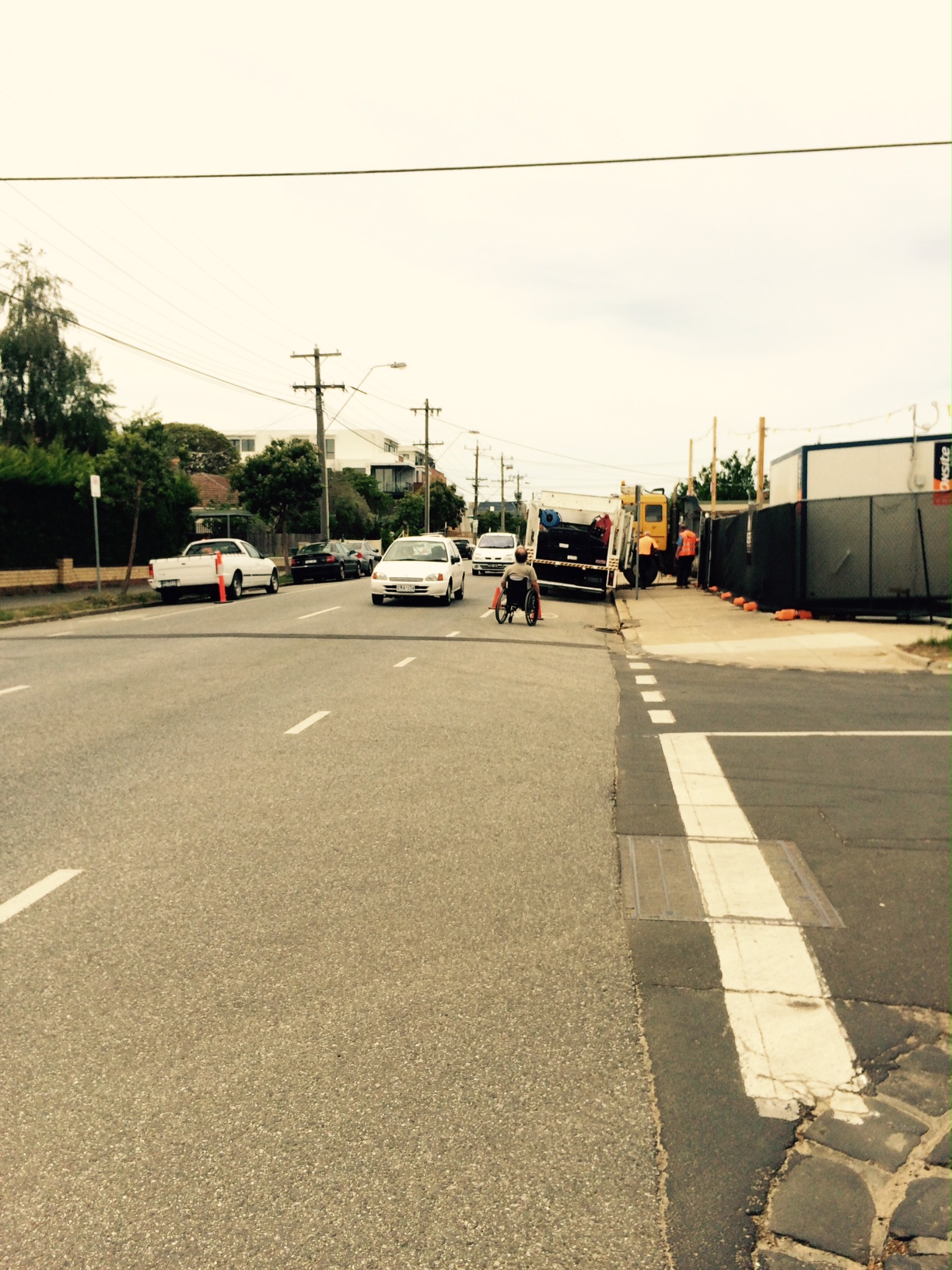
And by sheer coincidence we received the following photographs this morning from two alert residents in Carnegie. Doesn’t this say it all about council’s ‘road safety’ enforcement and how it clamps down on developers?

cr Neerim FullSizeRender

Glen Eira Council has sat on its backside for the past 13 years and basically reneged on all its promises. Two years in and the impacts of the zones are obvious to everyone – especially those residents living in the ‘sacrificial’ suburbs where there is inadequate protection, no design guidelines, no preferred character statements, no structure planning, no parking precinct plans. And yet Council and its sycophantic coucillors will not do a thing to correct one iota of its countless errors and slipshod strategic planning.

We have pointed out time and time again how other councils are rushing through amendment after amendment in order to redress their zones and the mistakes they now identify. Glen Eira is waiting until high tide when every suburb is thrashed and it is too late to do anything!

Even Greater Dandenong, which was the second council to rush through its zones in November 2013, is starting to see the error of its ways. It is now advertising and seeking community input on a new amendment which will substantially change much of the zoning that was introduced in 2013.

Below we feature extracts taken from the officer’s report (minutes of June 25th 2015) and a screen dump of the suggested changes. Please take careful note of these changes and the additional research undertaken. In Glen Eira the Housing Strategy (circa 1998) belongs in the dustbin of history as does most of the current planning scheme for its inconsistencies, its irrelevance and its lack of detail and concerted effort to protect neighbourhoods. We’ve bolded certain sections for greater emphases and ask residents to compare these statements to what has come out of Glen Eira.

The new residential zones were applied with the understanding that the Residential Growth Zone (RGZ) near the major shopping centres of Dandenong, Springvale and Noble Park would be reviewed to achieve preferred design outcomes for particular areas, better manage growth and continue to balance the needs of the community and landowners.

However it was identified that further policy, planning controls and research work was required in the Residential Growth Zone / Substantial Change Area to clarify the preferred urban landscape in these areas. This will increase certainty for local residents and the development community and improve built form outcomes. Planning consultants, Planisphere, were engaged and commenced this work, including comprehensive community consultation through the Greater Dandenong Residential Planning Policy and Controls Project

In particular, the Project:

Examined the new residential zones and accompanying schedules and the opportunity they present to give clear direction to Council’s housing objectives; and Aimed to improve the quality and amenity of new housing development by strengthening the urban design policies in Council’s Residential Development and Neighbourhood Character Policy (Clause 22.09); and Where appropriate, recommended additional variations to the ResCode standards and building height controls.

The review of the current planning provisions found that not only are the areas designated for ‘substantial’ change expansive, but the purposes of the new residential zones imply a degree of change for that area exceeds the built form outcomes anticipated in the Municipal Strategic Statement and the Residential Development and Neighbourhood Character Policy. These findings led to the preparation of a refined Residential Framework, a revision of the Substantial Change Areas boundaries, improved design principles in the local policy, additional variations to the ResCode standards and the specification of building height controls for different residential areas.

Planning Scheme Amendment C182 proposes to:

Amend the existing Schedules to the Residential Zones and introduce a new Schedule 3 to the Residential Growth Zone;

The amendment seeks to rezone identified areas in Dandenong and Noble Park from Residential Growth Zone to General Residential Zone to reflect the revised Residential Framework and achieve a transition in built form while ensuring that the identified valued neighbourhood character and amenity of established residential areas is protected.

Direct notification of the proposed changes will be provided to all owners and occupiers of land within the current Residential Growth Zone and land proposed to be rezoned (approximately 9,000 letters). In addition to the minimum notifications prescribed by the Act, the above notifications will be accompanied by an explanatory brochure that will provide a summary of the proposed changes for the community

As this is a complex planning scheme amendment, a range of materials will be provided to help explain the proposed changes to the community:

Four Information Drop-In Sessions will be held in Dandenong, Noble Park and Springvale during the exhibition period to provide residents with an opportunity to talk directly with planning officers and ask questions about the proposed changes;

Notice on Council’s website will include an interactive map where residents will be able to check if their street is affected by the proposed changes

gdandy

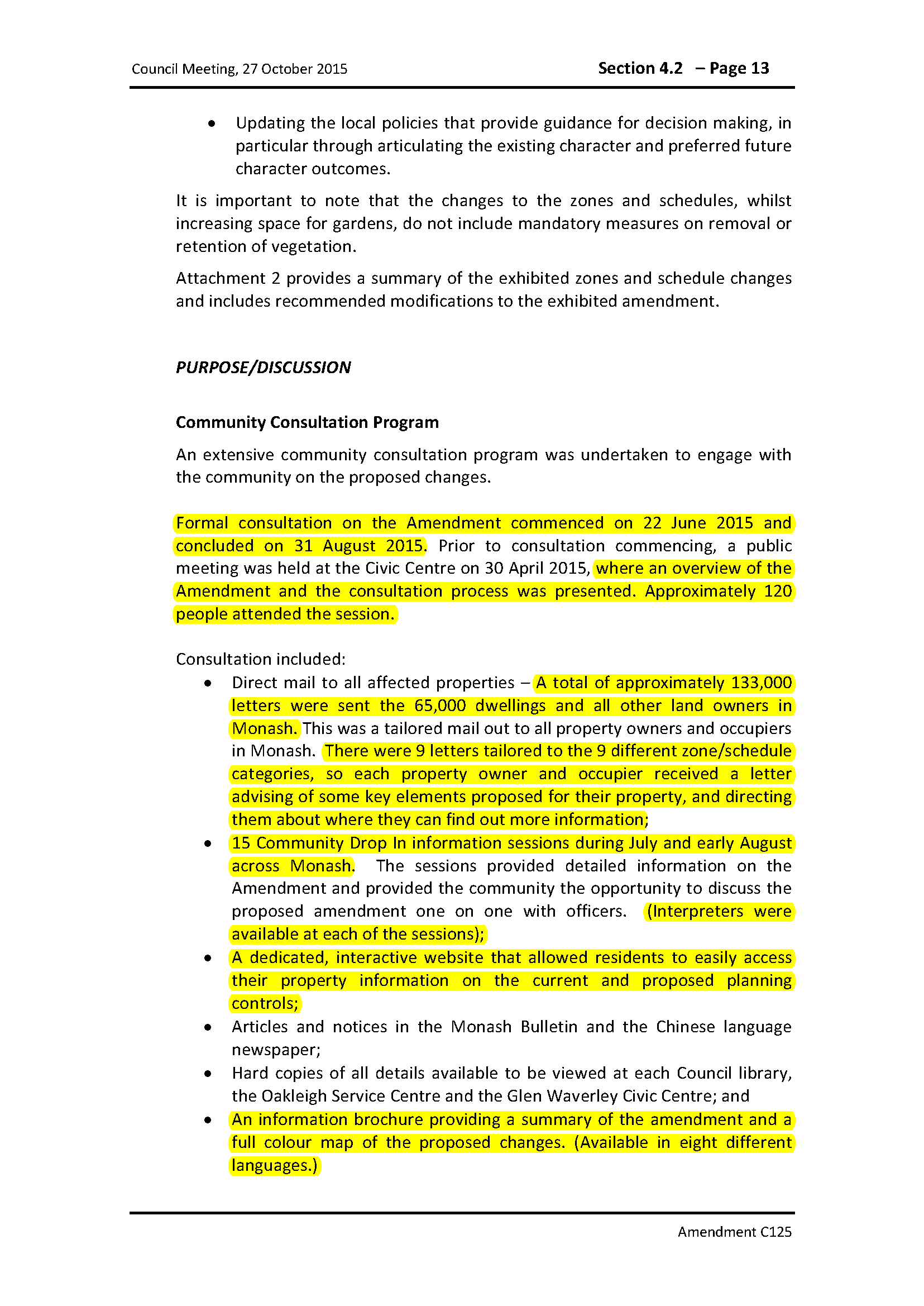
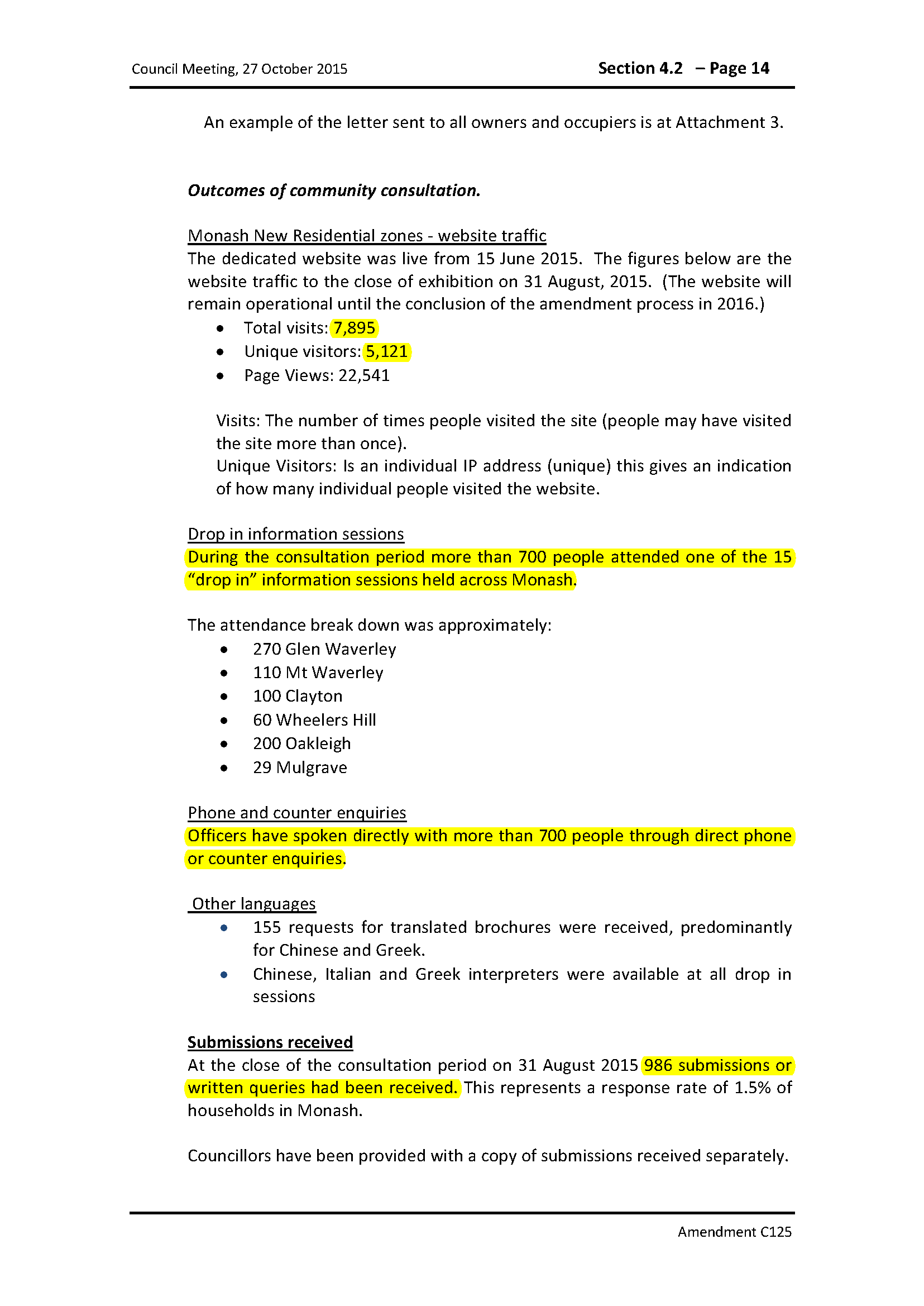
Pages from 4.2-report_Page_1Pages from 4.2-report_Page_2The above images come from Monash City council’s report on several proposed amendments to their residential zones. Glen Eira Council of course only engages in widespread ‘consultation’ when it needs to spread its propaganda and undertake some costly damage control (the 11 cents flyer) or when it wants to get its way with removing the Caulfield Park conservatory. These are the only times in recent memory that every resident received anything from council on proposals or envisaged changes to policy.

We highlight this as a reminder of what CAN BE DONE when there is a genuine commitment from a council to inform, engage, and listen to residents. None of this happens in Glen Eira. We have repeated ad nauseum that the zones were introduced by stealth, without any consultation, and with the outrageous justification that had council consulted, then the ‘results’ would have been worse. Appalling and unforgiveable. Lest we forget!

The very expensive exercise in publishing the Annual Report is now over. Councillors ‘accepted’ the report in a record 7 minutes at Tuesday night’s Special Council Meeting! How many even read it? As with previous reports, Council is wonderful at providing mind boggling statistics so that no-one has any idea as to what they actually represent or mean. There’s one example we simply cannot pass over since it is so ludicrous. We invite comments as to what the following may mean –

“Playground inspections – 18,377” (page 101)

Council claims there are 47 playgrounds. That would mean that EVERY SINGLE playground is ‘inspected’ 1.07 times each day! But what does ‘inspection’ actually mean’? Occupational Health & Safety testing? A drive past by cleaners? An ‘inspection’ via aerial photographs? A casual walk through? Such, dear readers is the value of this figure.

Next there is the question regarding restaurants and ‘food registered businesses’. For years now Glen Eira has claimed that there are 840 registered food businesses in the municipality. We certainly doubt this given the explosion of cafes everywhere. It also doesn’t explain why council should have reaped an extra $107,000 in fees as stated in the accounts, if the number remains at 840 and registration fees have remained relatively stable.

Then there’s the promise that service levels will be maintained. Another unsubstantiated claim when the figures are looked at. Some examples: –

  • Less drains have been cleared – 32 km in 2010 and now 14.8km
  • Less footpaths fixed – 28.9 km in 2010 and now 19.61 km (and the reason given? ‘The decrease in the amount of footpaths replaced is due to a cost increase per square metre laid due to a new tender’. What does this say about the tendering process and how does it explain that for every single year since 2010 the km have dropped? Wasn’t part of this with the ‘old tender’?
  • Less roads reconstructed – 4.77 in 2010 and now 4.06
  • Mains water use in parks has doubled since 2010/11
  • Gesac has gobbled up double of water use not in parks since 2010/11

The best however, requires no commentary from us. Here are some extracts that we are confident will deliver howls of laughter!

Glen Eira City Council is committed to governing the City of Glen Eira in a democratic, open and responsible manner in the best interests of the community.

Council consults, listens and takes note of community views to determine its priorities and needs, and then acts through open, transparent processes that are financially and environmentally responsible and sustainable.

Glen Eira City Council is charging developers more than any other municipality in order to help pay for new and better parks for Glen Eira. (page 50) (Stonnington $9.634m; page 123 of their annual report and their open space reserve now stands at $36.932m).

Council will use current and emerging technology each year to provide broader opportunities for the community members to have their say about Council services and future plans. The use of sound evidence, community input and representation, and transparent decision-making processes; including follow-up and reporting will ensure Glen Eira continues to offer services that meet community needs. (page 53)

And then there’s always the ‘gunna do’ promises that never eventuate

Due to Melbourne’s building boom, Council is managing a large number of planning applications.With more development happening throughout the municipality and grade separation works commencing, Glen Eira will continue to be an attractive place to live. Council will implement further measures to reduce the amenity impact on residents as a result of this construction activity

Population and development pressures will impact particularly on parking in local streets. Council will continue to review and develop plans while working with the community, to strategically manage and accommodate for the future impact of this.

Glen Eira is experiencing extraordinary levels of building activity with many multi-unit developments being constructed. As a result, residents are experiencing substantial inconvenience such as road closures, limited parking, building noise and dust. Council’s challenge is to try to balance the needs of residents and their comfort with allowing the construction process to be completed quickly and safely.

And the best for last! –

Good governance is accountable, transparent,responsive, inclusive and efficient. Council is committed to providing good governance through its decision-making process by engaging the community, providing leadership, investing in the future and acting responsibly.

Council governs for and on behalf of the Glen Eira community. Good governance is accountable, lawful, transparent, responsive, effective and efficient, equitable and inclusive.

« Previous PageNext Page »